Let’s be real for a second. When you first move to Japan, you have this vision of spending your weekends strolling peacefully through empty, mist-covered temple grounds, finding your inner peace. Then reality hits. You realize that most of the famous spots involve navigating chaotic train transfers, squeezing onto sidewalks that are roughly the width of a shoebox, and sweating through your favorite shirt while elbow-to-elbow with tour groups.
It can be completely overwhelming. But Hasedera Temple Kamakura is one of those rare places that is absolutely worth the logistical hurdles. Unlike the flat, gravel expanses of some city temples, Hasedera is built vertically into a lush hillside right on the coast. It has a mysterious underground cave, jaw-dropping ocean views, and an ancient golden deity that will literally stop you in your tracks.
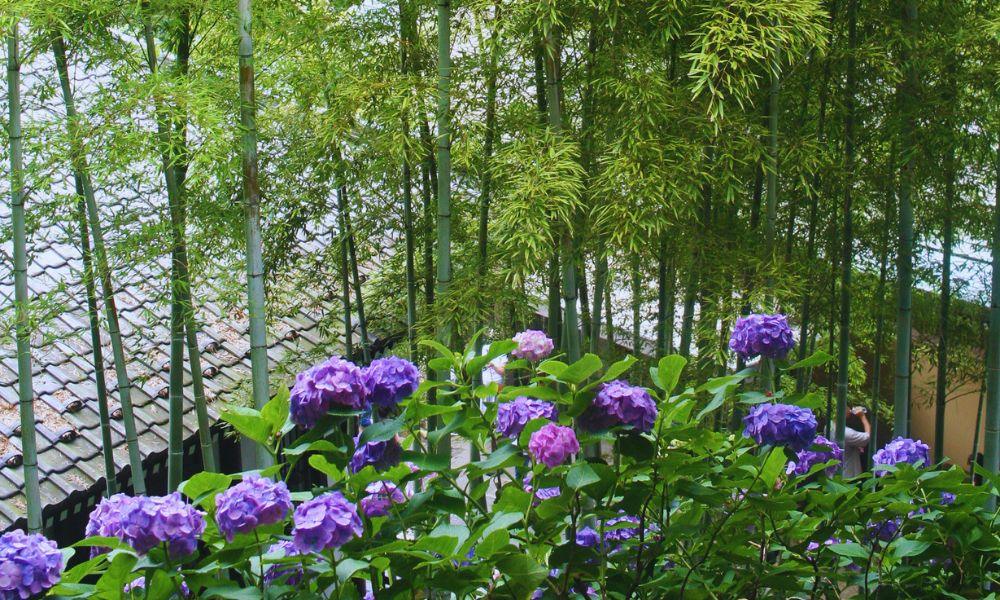
A quick note on timing: You might know Hasedera for its famous summer hydrangeas (ajisai). I am intentionally not focusing on that today because visiting during June requires an entirely different level of mental preparation and an agonizing timed-ticket system. If you are specifically brave enough to tackle the peak bloom crowds, you can head over to my dedicated survival guide for that here:
For the other eleven months of the year, here is your incredibly detailed, step-by-step guide to doing Hasedera right, keeping your sanity intact, and actually enjoying your day trip.
Going to Hasedera Temple Kamakura From Tokyo
Transparency Note: This post may contain affiliate links. If you book or buy through them, I may earn a small commission at no extra cost to you. Thank you for supporting the blog!
Getting down to Kamakura Station from Tokyo via the Shonan-Shinjuku Line is the easy part. The true test of your patience begins when you transfer to the Enoden line.
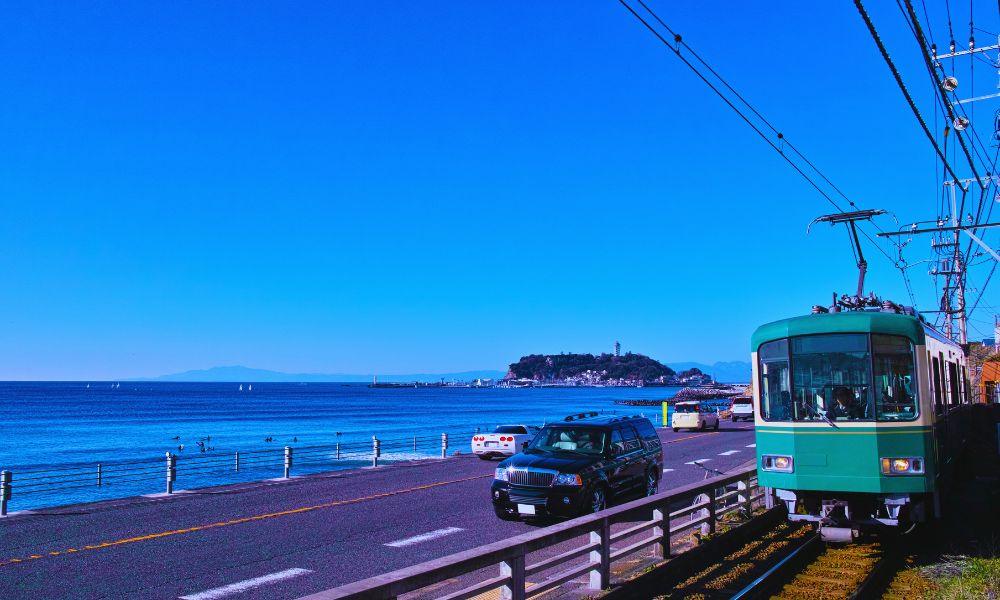
The Enoden is a charming, retro streetcar that weaves right through local backyards and along the coastline. It is also microscopic. Unless you get incredibly lucky, you will be standing, squished against a window, holding your breath for the three stops it takes to reach Hase Station.

My biggest time-saving hack: Do not rely on fumbling with a digital Suica card at the tiny, chaotic Hase Station gates. The card readers are slow, the crowds bottleneck instantly, and it’s a uniquely frustrating way to start your day. Instead, buy the Kamakura Regional Pass or a curated day tour through Klook before you leave your apartment. It lets you bypass the agonizing ticket machine lines completely, saves you cash if you’re hopping around the area (like going to see the Great Buddha nearby), and makes the transit experience so much smoother.
Walking From Hase Station to Hasedera Temple
When you exit Hase Station, you’re going to turn right and walk for about five minutes. Here is the expat truth: the sidewalk here is practically non-existent. You will be walking in a single-file line, dodging oncoming traffic, stray taxis, and incredibly enthusiastic rickshaw pullers. Just stick to the side, follow the flow of foot traffic, and try not to get distracted by the matcha ice cream stands just yet—save that for the walk back.
Entry and Tickets to Hasedera Temple Kamakura
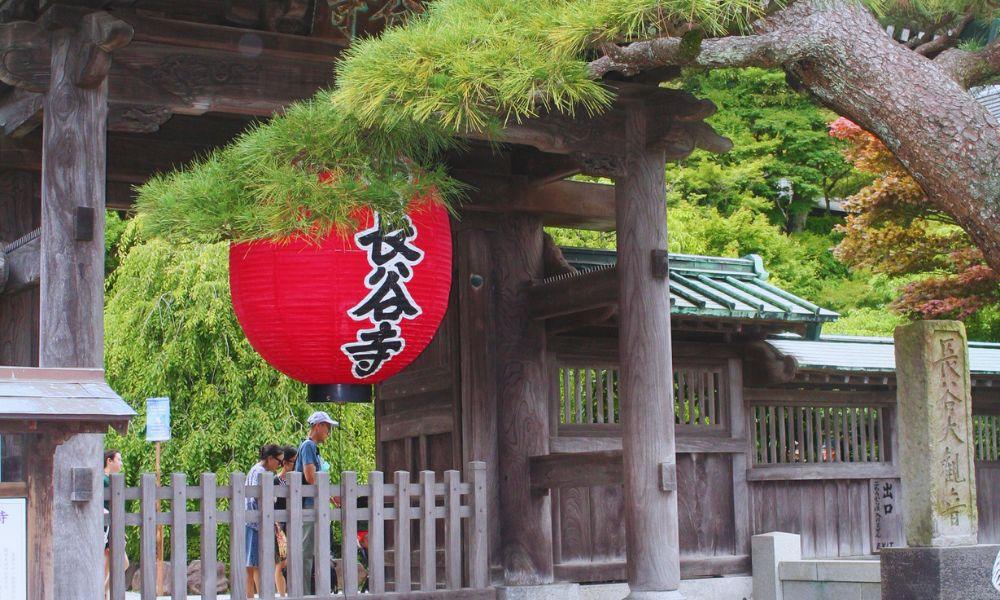
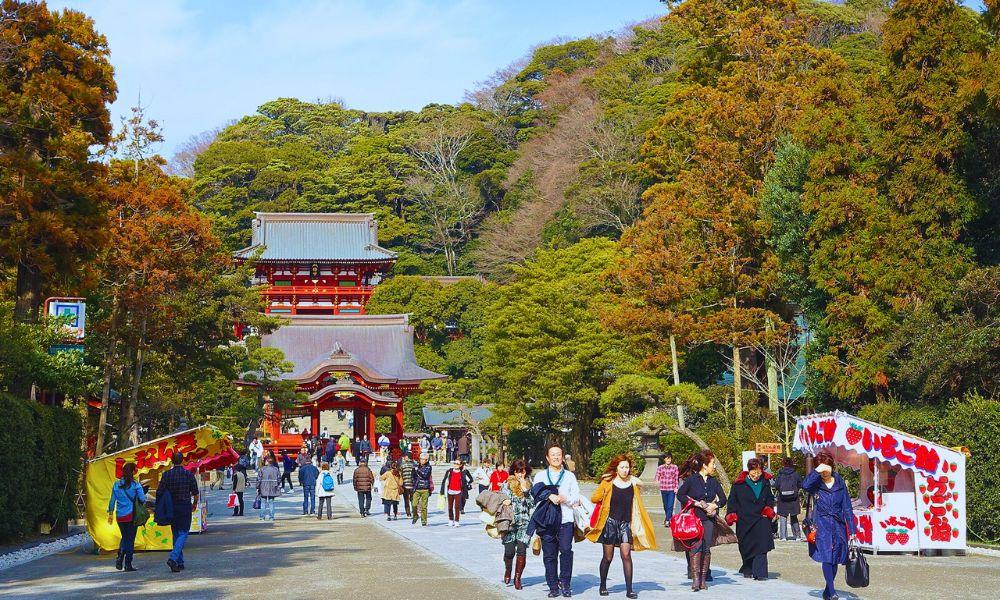
When you finally arrive at the main gate—marked by that gorgeous, iconic red paper lantern and the massive pine tree—you’ll likely see a crowd of tourists bottlenecking at the entrance. Do not panic, and definitely do not just blindly stand at the back of the nearest line.
Here is exactly how the entry works so you can breeze through like a seasoned local.
The standard admission fee is ¥400 for adults (and ¥200 for elementary school kids). The temple grounds open at 8:00 AM, and if you want the most peaceful experience, you really should aim to be standing at the gate at 7:55 AM.
When you approach the entrance, you basically have two choices: the manned ticket window or the automated ticket machines.
If you are paying with cash, or if you specifically want a beautifully printed paper ticket as a physical souvenir for your travel journal, line up here. Just be warned, this line always moves the slowest because people are inevitably digging for exact change in their coin purses while juggling their umbrellas.
Look for the automated ticket vending machines just off to the side of the gate. This is where you save your sanity. Not only do they have an English language toggle, but they fully accept IC Cards! If you have your Suica or Pasmo loaded on your Apple Wallet or physical card, you can just tap, grab your entry pass, and walk straight in. Hasedera is actually incredibly modernized for an ancient temple—they also accept major credit cards and smartphone QR payments like PayPay at the gates. This is a massive relief if you accidentally blew all your yen on street food and forgot to hit the 7-Eleven ATM on your way from the station.
The moment you scan your ticket and step past the gate, the chaos of the street completely fades. Take a breath. You made it.
Hasedera Temple Kamakura Stroll Garden and Koi Ponds
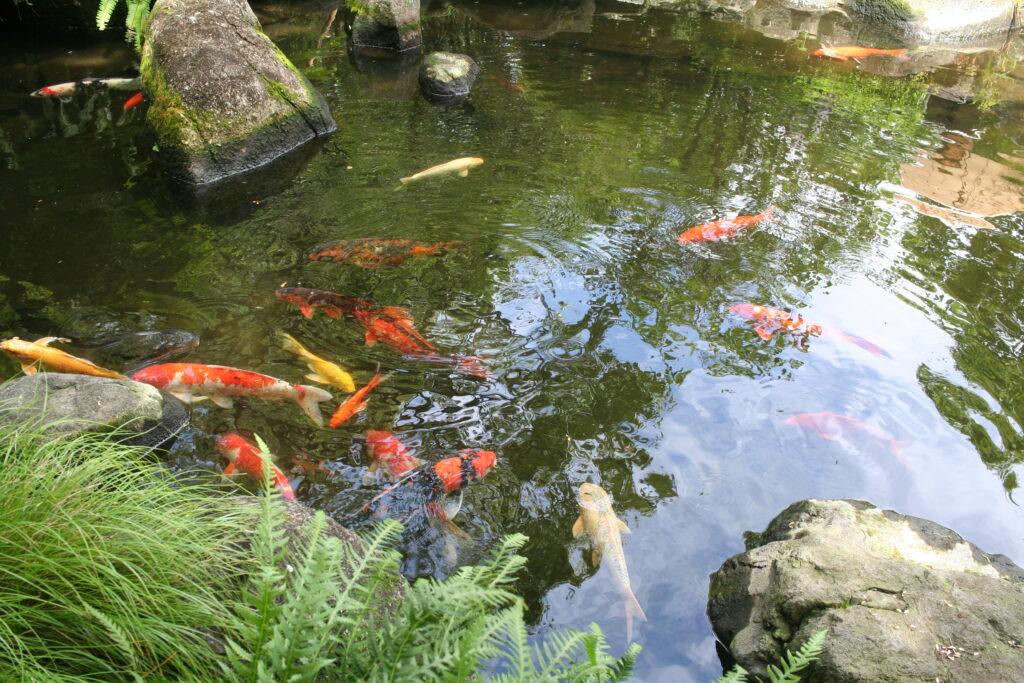
Immediately upon entering, you are welcomed by a deeply manicured stroll garden. Taking center stage here are two expansive, interconnected koi ponds (the Myochi-ike and Hojo-ike). Walk right over to the water’s edge. The koi in these ponds are absolute units—practically the size of small dogs—and watching them glide under the little stone bridges is the perfect way to decompress after that cramped Enoden train ride.
Hasedera Temple’s Three Cute Jizos (Ryoen Jizo)
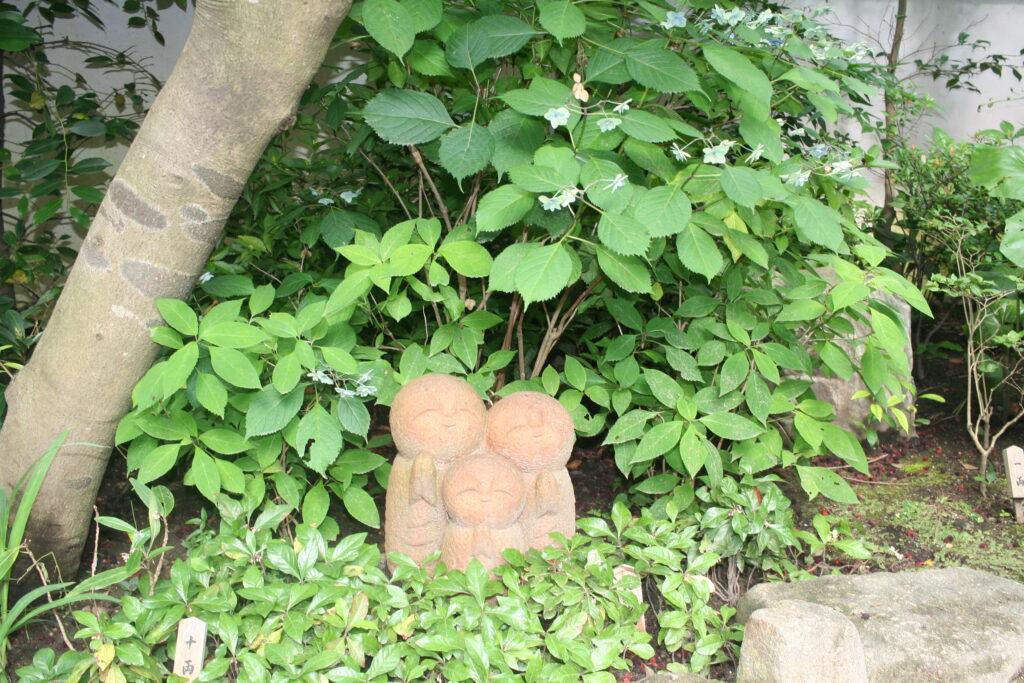
As you wander the paved paths around the water, keep your eyes pointed toward the ground. Tucked right into the lush moss and greenery are the Ryoen Jizo—three tiny, unbelievably cute stone Jizo statues huddled together, beaming with peaceful smiles.
“Ryoen” translates roughly to “good matches” or “good relationships.” They are incredibly photogenic, so crouch down and grab a shot of them.
Expat Scavenger Hunt Tip: There are actually a few of these little Jizo trios hidden in different spots all over the temple grounds as you climb the mountain. Finding them all is a fun little distraction, especially if you dragged kids along for the day trip!
The Giant Smiling Jizo (Nagomi Jizo)
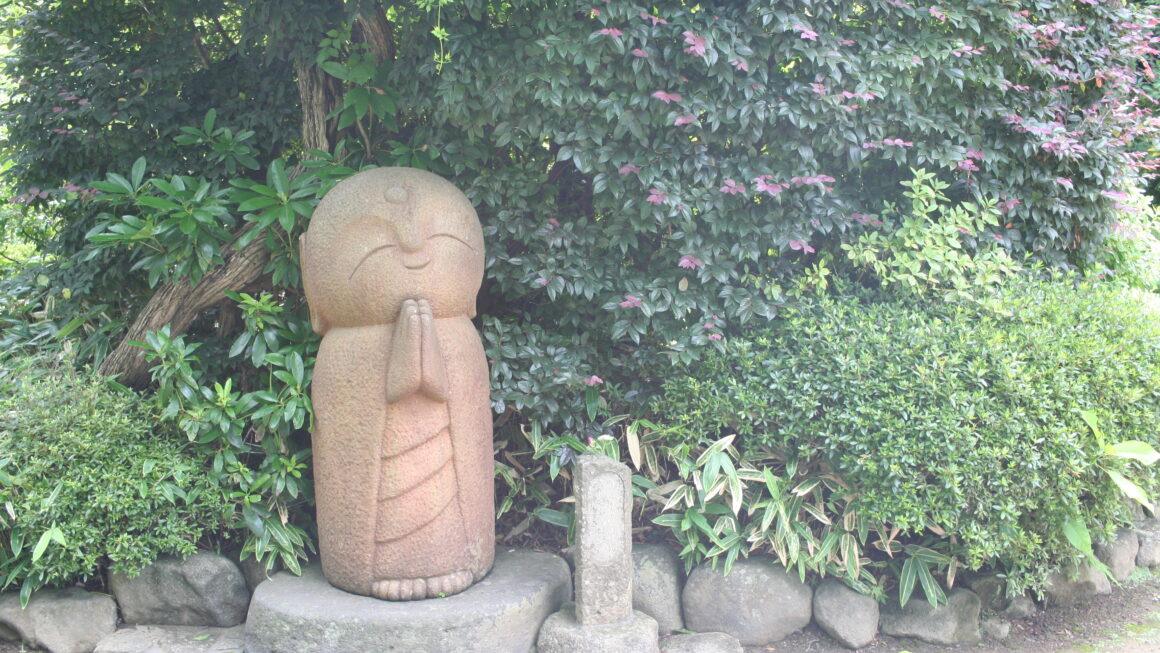
Just a few steps further along the path wrapping around the pond, you will run into the Nagomi Jizo. While the three Ryoen Jizo are tiny and hidden, the Nagomi Jizo is massive, completely round, and impossible to miss.
He stands there with his hands peacefully folded together under his robes and the most blissed-out, joyful expression on his face. “Nagomi” literally means to soothe or calm down, and honestly, just looking at him lowers your blood pressure. This is one of the most popular photo spots in the entire lower garden, so you might have to wait a minute for the crowd to clear to snap your picture, but it’s definitely worth the wait.
Hasedera Temple Temizuya
Once you’ve taken your photos with the Nagomi Jizo, follow the main path as it curves slightly toward the center of the grounds. This brings you to the Temizuya (water purification pavilion).
If you’ve ever felt awkward at these pavilions because you aren’t exactly sure of the etiquette, don’t sweat it. Take one of the wooden ladles, scoop some water, and gently pour a little over your left hand, then your right. It’s a simple, grounding ritual that physically and mentally prepares you before you approach the temple buildings.
Rubbing the Daikoku Statue for Good Luck
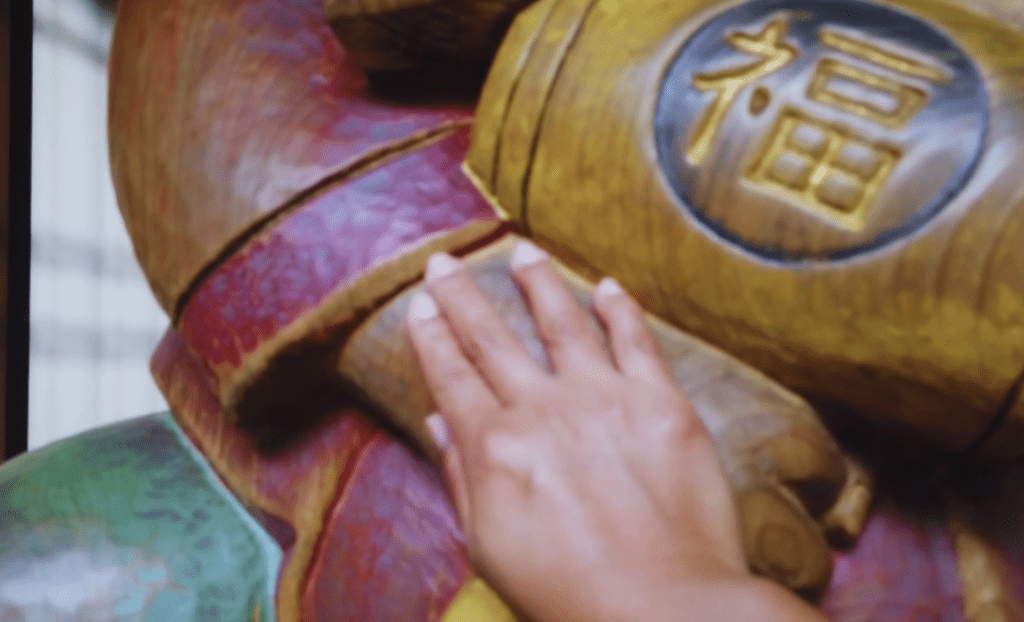
Right next to the Temizuya, you will find a small, dedicated building called the Daikoku-do. Step up to it and keep your eyes peeled, because right here you will spot a plump, cheerful-looking wooden statue.
This is Daikoku-ten, the Japanese deity of wealth, agriculture, and prosperity. You’ll immediately notice that his protruding belly, his mallet, and his head are completely polished and shiny compared to the rest of the dark wood. That’s because giving him a firm rub is said to bring financial luck. With the current exchange rate and the price of living in Tokyo these days, we need to take all the good fortune we can get. Join the crowd, wait your turn, and give his belly a solid pat.
Hasedera Temple Benten-do Hall
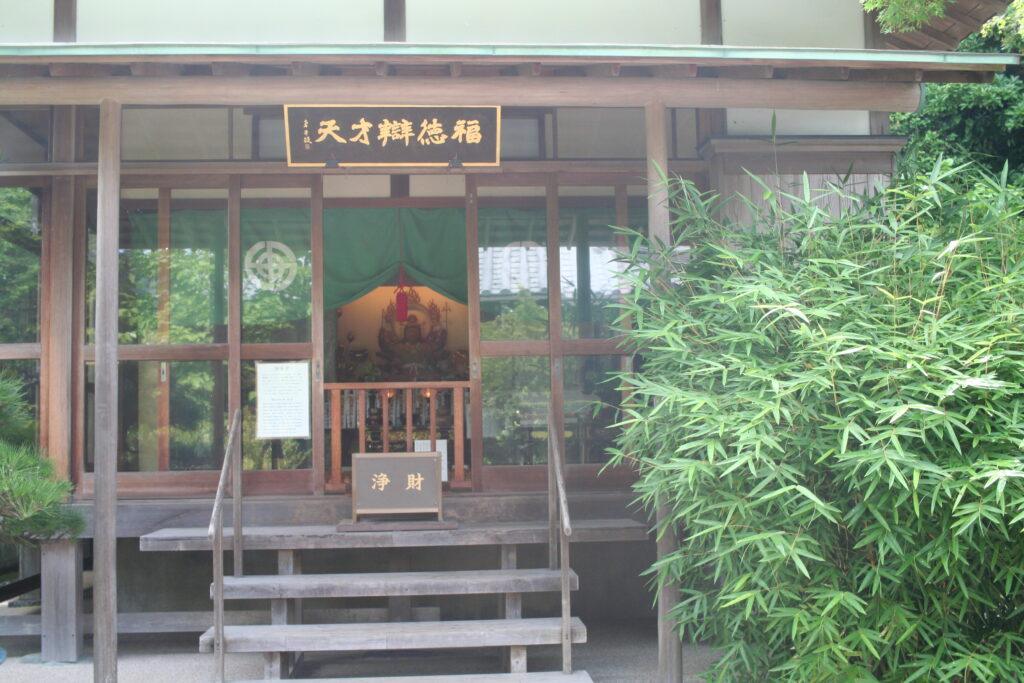
Right next door to the Daikoku-do sits the Benten-do. Do not just walk past this building! This hall is dedicated to Benzaiten, the goddess of beauty, music, and wealth (she is actually the only female deity among Japan’s Seven Lucky Gods). Inside, there is an impressive statue of her with eight arms, each holding a different Buddhist weapon or symbol. It is a deeply revered spot, especially for anyone in the creative or arts industries, so take a second to pay your respects.
Hasedera Temple Karesansui (Dry Rock Garden) at the Shoin
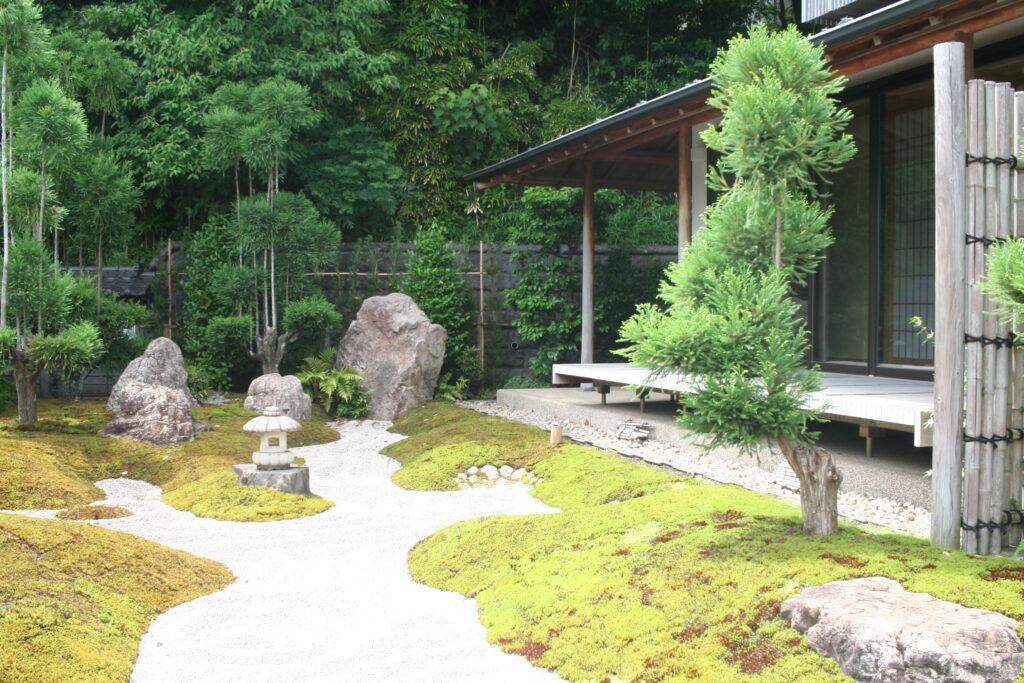
As you move just past the Daikoku-do, you’ll walk right by the Shoin (the temple’s traditional writing hall, where visitors can actually sit and practice tracing Buddhist sutras). Right in front of this hall, the landscape suddenly shifts and you’ll encounter a stunning karesansui (dry landscape rock garden).
The visual contrast here is beautiful. After walking past the lush, wet koi ponds and the heavy green moss near the entrance, this space opens up with meticulously raked white gravel and carefully placed stones representing islands and flowing water. Take a moment to appreciate the stark symmetry and the quiet Zen aesthetic—it gives you that immediate, quintessential “traditional Japanese temple” feeling right before you transition into the Benten-do and the dark caves just ahead.
Benten-kutsu Cave (My Absolute Favorite Spot)
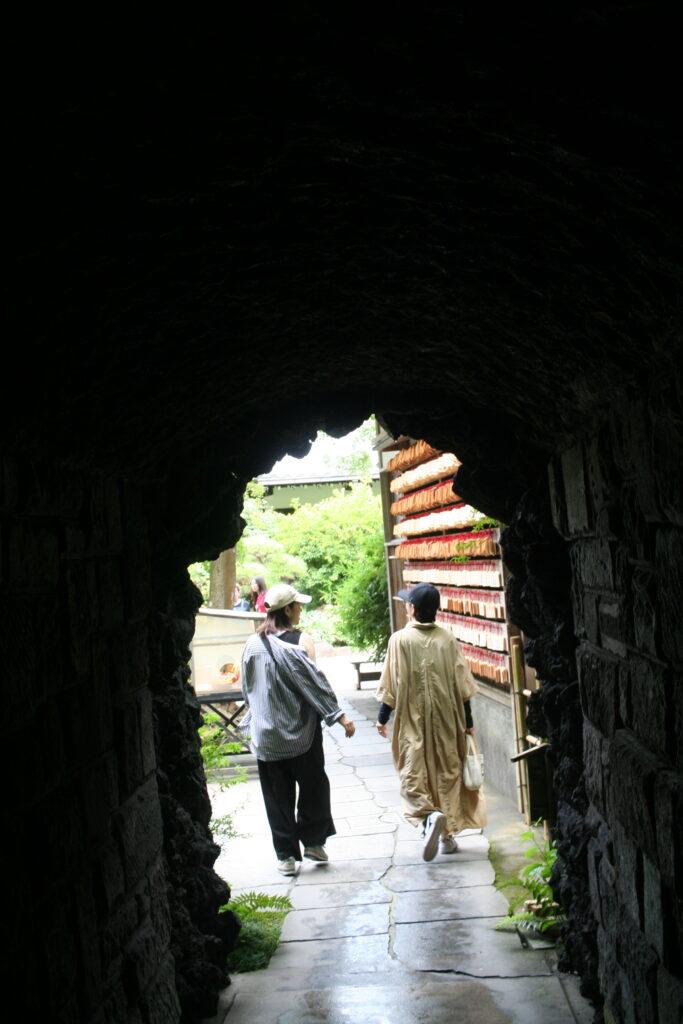
Right behind the Benten-do, tucked directly into the sheer rock face of the mountain, is my absolute favorite hidden gem: the entrance to the Benten-kutsu cave system.
Before you go in, you’ll see a spot selling tiny, finger-sized wooden figures of Benzaiten. If you want to participate, you can buy one, write your name and a wish on the back with a marker, and take it inside with you.
The physical entrance is deceptively small—you literally have to duck your head quite low to step inside. The transition is wild. You go from the bright, humid garden to cool, damp darkness in two steps. It feels like you’ve stumbled into an ancient secret passageway. The air inside smells heavily of rich incense and wet earth, and the winding tunnels are dimly lit by flickering candles.
As you let your eyes adjust and navigate the low-ceilinged corridors, you’ll see the walls are filled with intricate statues of Benzaiten and her followers, carved directly into the stone. You’ll also spot hundreds of those tiny wooden figures left by previous visitors lined up in the crevices. Take your time winding through here; it’s a completely unique, almost eerie experience that you won’t find at standard flat-ground temples in Tokyo.
Jizo-do Landing
When you finally emerge from the dark, incense-heavy Benten-kutsu cave on the lower level, you’ll loop back toward the center of the grounds to tackle the mountain.
Follow the path to the main set of stone stairs leading up to the upper terrace.
This is a serious stone staircase. If you are doing this in the peak of Japanese summer, do as I do and drecn shirt with this magical spray (I’m not even exaggerating) I discovered in the drugstore aisles. It genuinely makes your clothes feel icy against your skin when the wind hits you.
Thankfully, you don’t have to do it all in one go. About halfway up the stairs, the path opens onto a wide landing area. This is the Jizo-do.
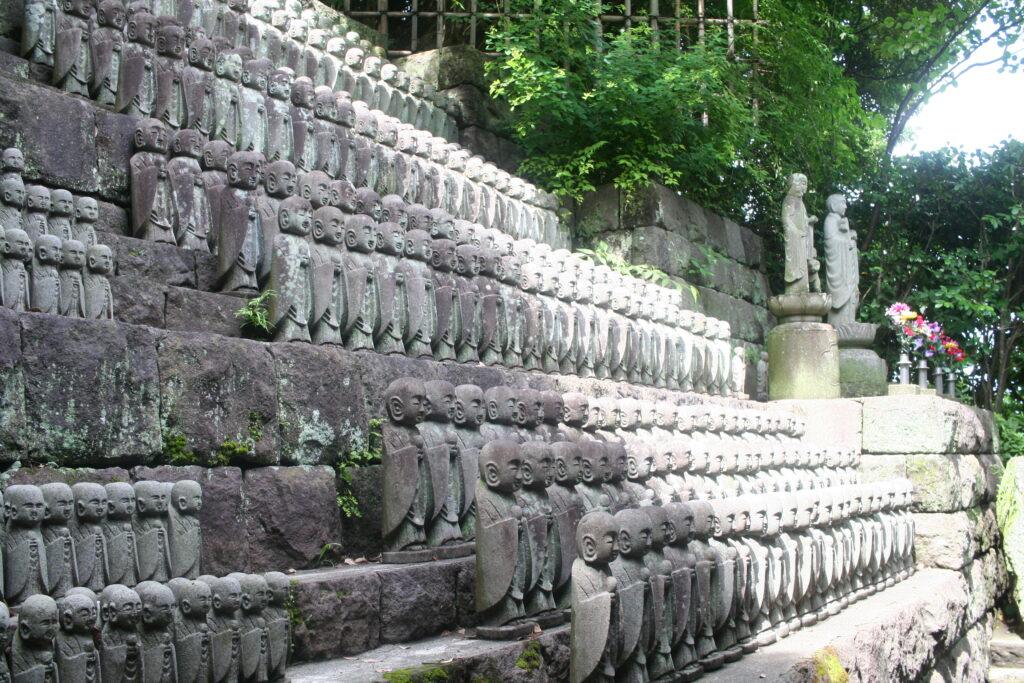
This area is deeply peaceful and visually striking. The hall here enshrines Fukuju Jizo, but the real impact comes from the surrounding Sentai Jizo (Thousand Jizo). Lined up in endless, meticulously organized rows are thousands of tiny stone Jizo statues. They are placed here by families to comfort the souls of miscarried, stillborn, and deceased children. It is a profoundly moving space, and the sheer volume of the statues creates a very heavy, quiet energy that forces you to slow down and reflect before you finish the climb.
The Upper Terrace & The Main Event: Kannon-do Hall
Once you conquer the final flight of stairs, you step onto the expansive upper terrace. Right in the center sits the main hall: the Kannon-do.
Walk up the wooden steps, slip your shoes off, and step inside. Housed here is the Hase Kannon, a staggering, 9.18-meter-tall wooden statue of Kannon Bodhisattva, making it one of the largest wooden Buddhist statues in all of Japan.
It is a magnificent, deeply imposing figure completely gilded in gold leaf. Kannon is the Bodhisattva of mercy and compassion, and this specific statue has eleven distinct heads in addition to the main one. Each face has a different expression, symbolizing that Kannon listens to the wishes and sees the suffering of all types of people in all directions.
This is also the place where you can buy the temple’s goshuin. I collect as many of these as I could, and Hasedera’s special hydrangea season goshuin is one of the prettiest in my collection.
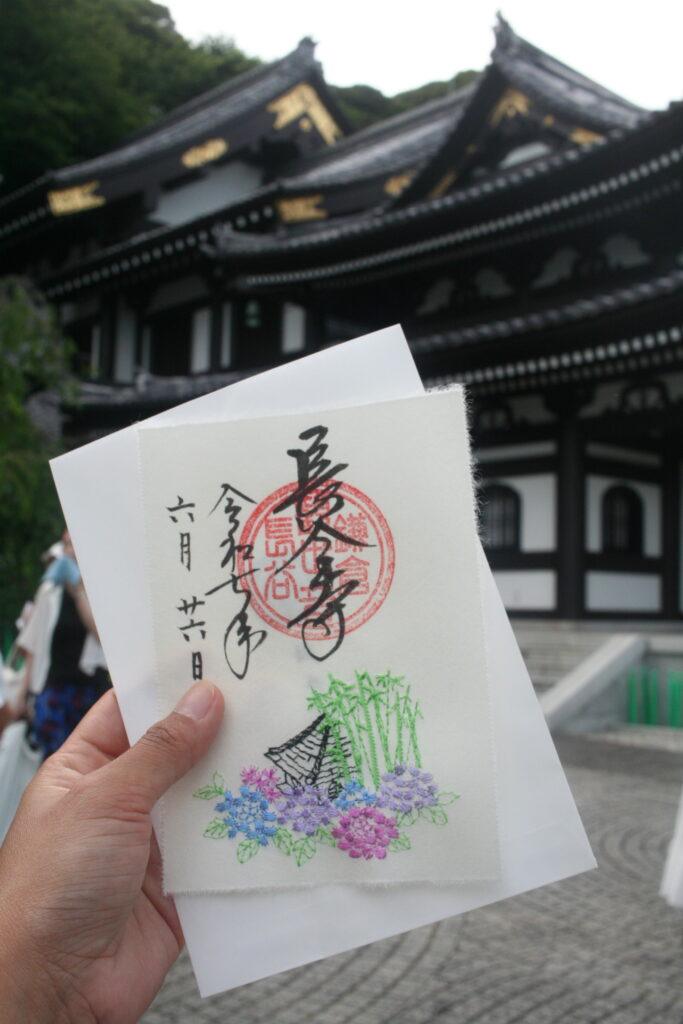
Absolutely no photography or video is allowed inside the Kannon-do hall. Do not try to sneak a photo from the doorway while the staff isn’t looking. Put your camera down, breathe in the incense, and just take in the sheer scale of the carving.
The Amida-do Hall & The Kyozo (Sutra Archive)
Right next to the main Kannon-do is the Amida-do Hall. Inside sits a striking golden statue of Amida Buddha. According to temple history, this specific statue was carved to ward off evil for Minamoto no Yoritomo, the very first shogun of the Kamakura shogunate. If you want to learn more about Minamoto no Yoritomo—and let me tell you, the history is super juicy—I wrote a bit about it here.
Just a few steps away on this upper terrace sits the Kyozo (Sutra Archive). This building is traditionally used for storing Buddhist scriptures. Inside, there is a fascinating feature: a massive, rotating hexagonal bookshelf called a Rinzo.
Buddhist tradition dictates that if you push the Rinzo and rotate it one full turn, you receive the exact same spiritual merit as if you had sat down and meticulously read every single scripture stored inside it. It’s the ultimate spiritual life-hack! To protect the structure, the Rinzo is usually only unlocked and allowed to be physically spun by visitors on specific days of the month, but it is a beautiful piece of craftsmanship to look at regardless).
The Kakigara Inari Shrine & The Oyster Shell Emas
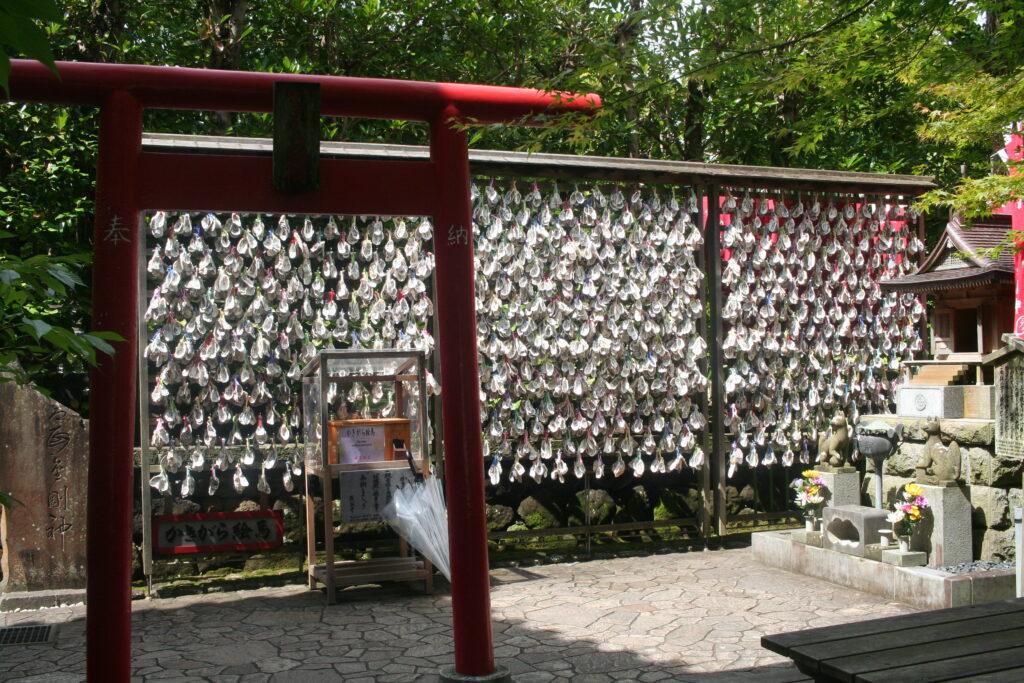
Tucked away on the upper grounds, right near the sutra archive, is a tiny, incredibly unique Inari shrine with a fantastic backstory: the Kakigara Inari Shrine.
If you’ve lived in Japan for a while, you are probably used to seeing standard wooden ema (prayer plaques) hanging at every shrine and temple. But at Kakigara Inari, the ema boards are shaped like actual oyster shells.
Why oysters? According to temple legend, when that massive golden Kannon statue was originally carved and cast into the sea in Nara over 1,300 years ago, it was a massive swarm of oyster shells that attached themselves to the wood and safely guided the deity across the ocean to the shores of Kamakura.
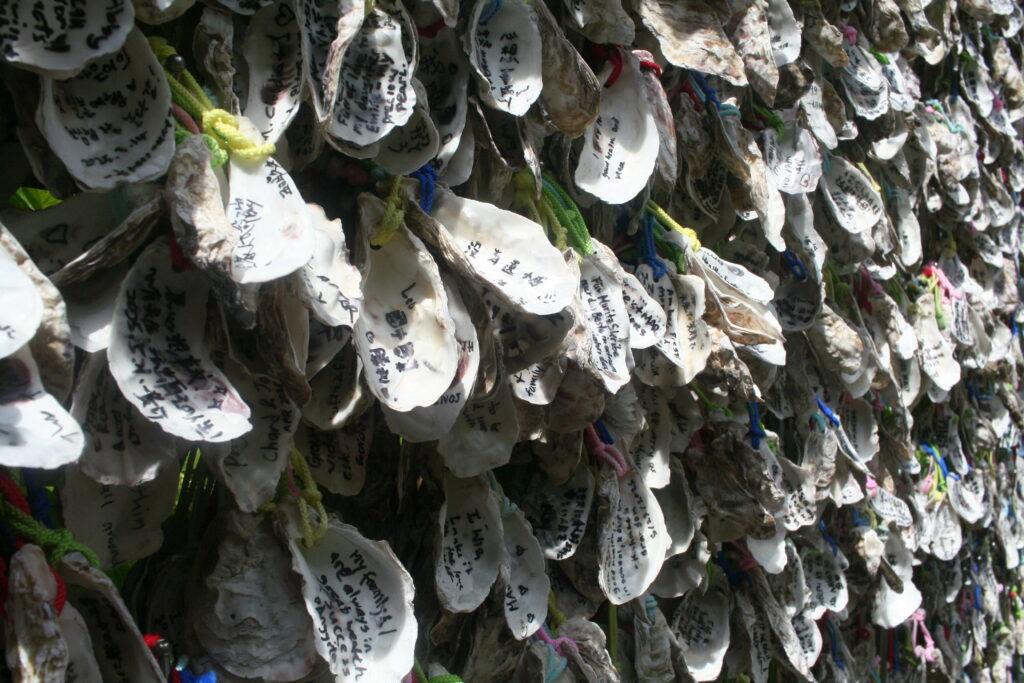
To honor that journey, this specific shrine is dedicated to those oyster shells, which are now associated with prayers for safety and overcoming misfortune. For about 300 yen, you can buy an oyster shell ema, write your wish on the inside with a marker, and hang it up on the racks alongside hundreds of others. It’s a beautifully aesthetic, highly intentional ritual that is entirely unique to Hasedera, and it makes for a much better memory than just pulling a standard paper fortune.
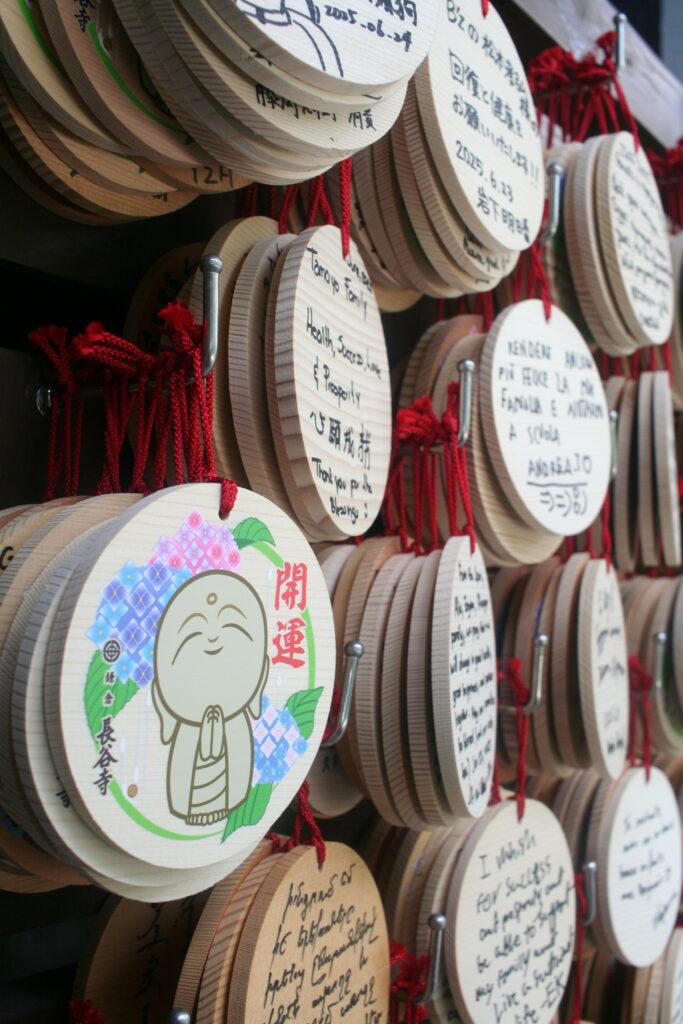
Oh, and just so we’re clear, Hasedera has the standard wooden emas as well, and one type has the cutest jizo designs.
From here, you are perfectly positioned to walk over to the far edge of the terrace and finally hit the Hasedera Temple’s observation deck…
The Observation Platform
Before you start thinking about heading back down to the street, walk over to the far edge of the upper level to the Miharashidai (Observation Platform).
This is the massive payoff for those stairs. You get a completely unobstructed, panoramic view overlooking Yuigahama Beach, the Kamakura coastline, and the sprawling Sagami Bay.
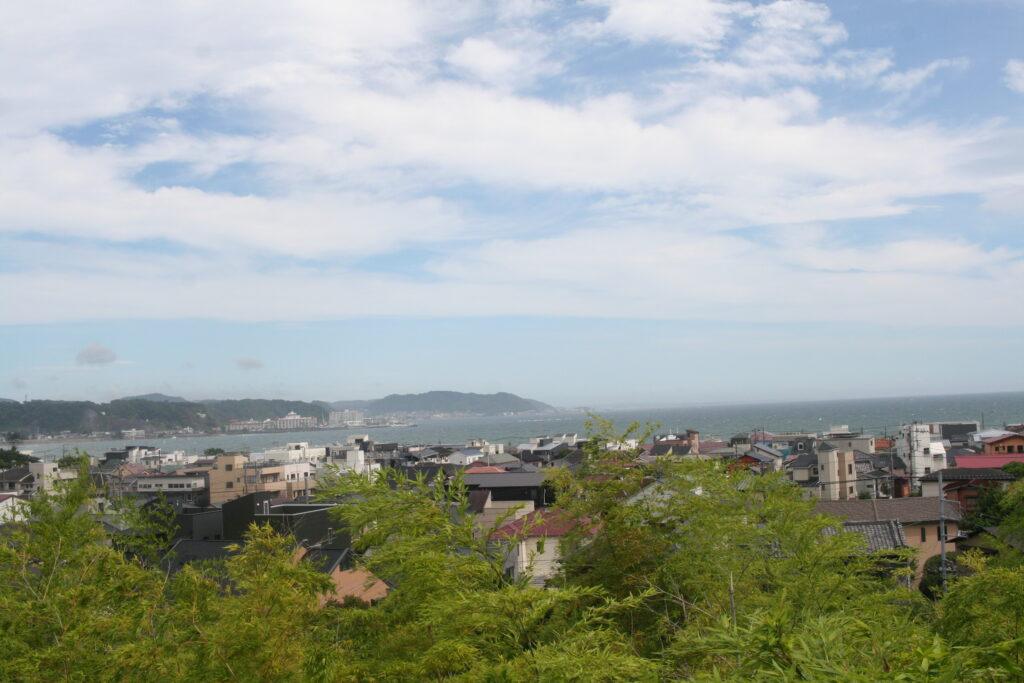
There are shaded seating areas here, and a small café/restaurant where you can buy matcha, dango, or an icy drink. Grab a seat under the umbrellas, let the ocean breeze finally cool you down, and take your photos.
But let’s talk about the physical toll of climbing those stairs. Even outside of peak summer, the humidity in Kamakura can feel like walking through warm soup. You will sweat.
Do not try to tough it out. I highly recommend getting one of those portable fans and keeping them running on high. I got mine form Rakuten and I love that they were surprisingly very light. I also liked that they offered very cute bright colors perfect for summer. I was debating whether to get the mint green or the pink one but settled with the former so my son can use it on outings as well.
![[商品価格に関しましては、リンクが作成された時点と現時点で情報が変更されている場合がございます。]](https://hbb.afl.rakuten.co.jp/hgb/5497d955.d742a082.5497d956.1aca9e6c/?me_id=1398321&item_id=10000134&pc=https%3A%2F%2Fthumbnail.image.rakuten.co.jp%2F%400_mall%2Fazusa%2Fcabinet%2Fsupersale%2F202606ss%2Fu16_06ss.jpg%3F_ex%3D240x240&s=240x240&t=picttext "[商品価格に関しましては、リンクが作成された時点と現時点で情報が変更されている場合がございます。]")

Another thing you should know is that Kamakura has a massive population of tombi (black kite hawks). They are massive, they are incredibly fast, and they actively watch tourists on this observation deck. If you hold a dango stick or a rice ball out over the railing for an Instagram photo, a hawk will dive-bomb you from behind and snatch it right out of your hand before you even know what happened. I’ve seen it happen to perfectly nice tourists. Keep your food strictly under the covered seating areas!
A Quick Note on the Prospect Path (Hydrangea Path)
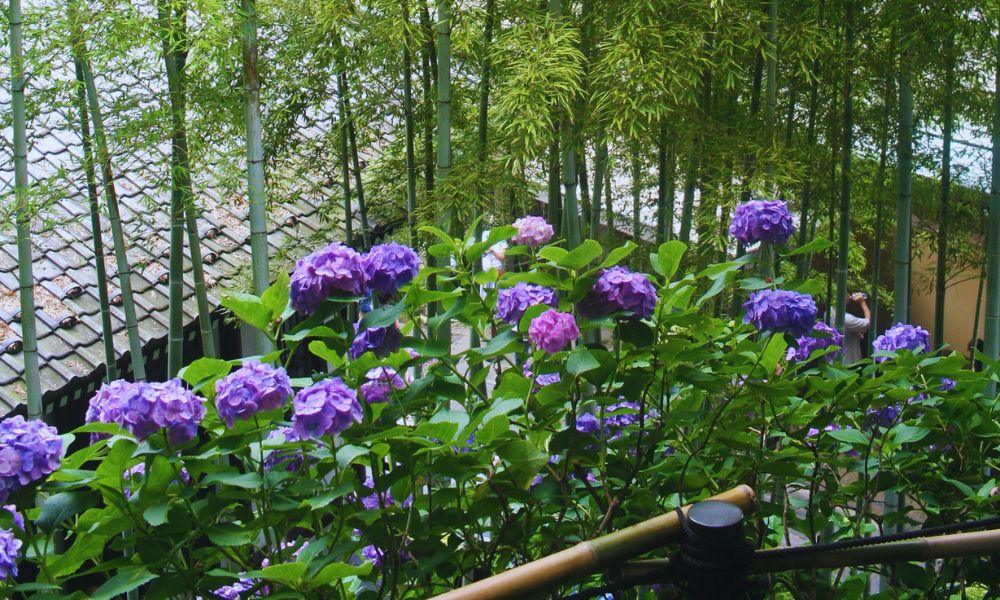
Behind the main halls, you’ll see a path that continues even further up the mountain. This is the Prospect Path, better known as the Ajisai-ro (Hydrangea Path).
If you are visiting in June, this hillside bursts into thousands of blue and purple hydrangeas. However, visiting during peak bloom requires a timed-ticket system and an entirely different level of mental preparation. If you are specifically braving the summer flower crowds, I have broken down exactly how to survive that ticketing system in my dedicated Hasedera Temple Hydrangeas Guide.
If you are visiting any other time of year, you can stroll up this path freely for an even higher vantage point over the bay.
Take a Hasedera Temple Virtual Walk With Me
Want to know exactly what the inside of that underground cave looks like, or see how steep the stairs actually are before you commit to the trip? Grab your coffee and take a calming virtual walk with me through the grounds in my video.
Want to conquer Kamakura like a local?
If piecing together the rest of your Kamakura itinerary is giving you a headache, I’ve got something that will make your life significantly easier. I put together a comprehensive, 17-page insider’s guide to the Kita-Kamakura temple walk, complete with a clickable map and my personal local food recommendations.

Want to make your day completely effortless?
I’ve bundled this entire tour, a clickable Google Map with my favorite local lunch spots pinned, and tons of insider tips into my beautifully designed 17-page Insider’s Guide to Kita-Kamakura PDF for just $3!
It’s everything you need for a perfect day, ready to use offline on your phone.
For the price of a convenience store onigiri ($3), you can download this PDF directly to your phone. It solves the biggest problem we face out here: knowing exactly what order to hit the sights so you aren’t backtracking, skipping the overpriced tourist-trap restaurants along the main drag, and finding those quiet, hidden matcha cafes that aren’t plastered all over TikTok yet. Grab your copy, take the stress out of planning, and go enjoy your weekend on the coast!