This Enoshima Shrine guide is the walkthrough I wish someone had shoved into my hands on my first visit. I’ve done this walk more times than I can count now, sometimes with a six-year-old attached to my hand asking why we can’t just take the escalator the whole way, sometimes solo with a coffee and zero deadlines.
So, this is not going to be a generic list of stops. I show here the actual order things come at you, the story behind my favorite corners, and the stuff nobody bothers mentioning until you’re standing at a fork in the path with a cranky kid and a dying phone battery.
The Legend Behind Enoshima Shrine
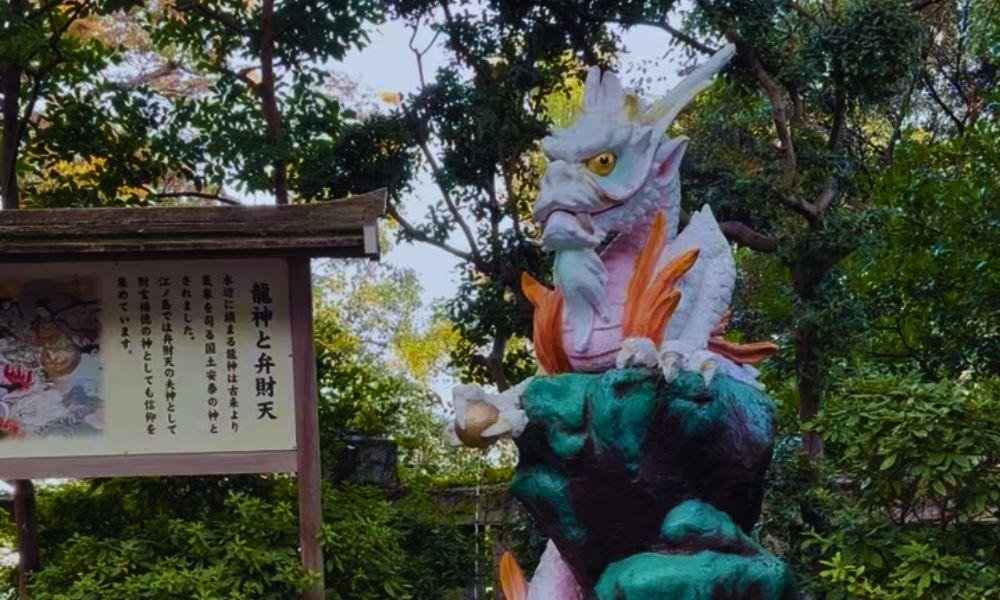
Every carving, lantern, and dragon statue on this island traces back to one story, so let’s get it out of the way before you climb a single step. Back before any shrine existed here, there was a village called Koshigoe on the mainland. According to the Enoshima Engi, written by the monk Kokei in 1047, that village had a genuine dragon infestation.
A five-headed dragon named Gozuryu had been wrecking the place for over a thousand years. Storms, earthquakes, the works. Then in 552 AD, the skies cleared and a goddess descended from heaven. Right before her feet touched the water, an island rose out of the sea to catch her. That island is Enoshima, and the goddess was Benzaiten.
Gozuryu took one look and fell instantly in love, proposing marriage almost on the spot, which is a bold move for a guy with a decade-spanning terror campaign on his resume. Benzaiten shut him down and told him to sort himself out first. He actually did it. Gave up the destruction. Turned protector of the region instead, and eventually won her over. Legend says he turned into the hill now called Ryuko-zan, still facing the island where she lives.
I tell my son this version on the climb up. The dragon statues, the crest stamped on every flag and manhole cover, the whole reason a shrine got built here in the first place, it all traces back to this one story.
Enoshima Shrine Guide: Benzaiten and The Hojo Clan Crest
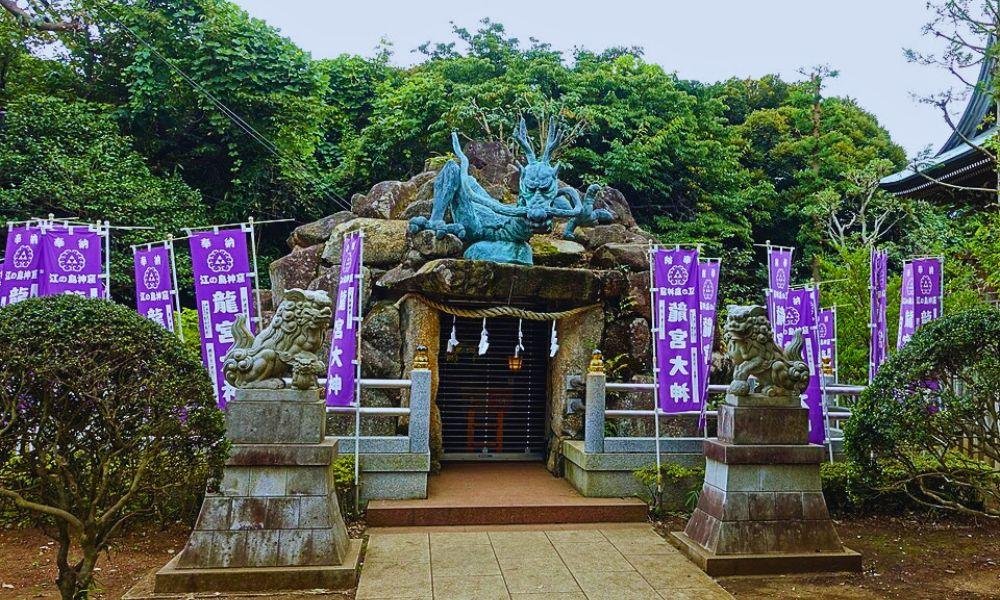
Benzaiten is the goddess of water, music, eloquence, and knowledge, and the only woman among Japan’s Seven Lucky Gods. Enoshima Shrine is one of just three great shrines in the country dedicated to her, alongside Itsukushima on Miyajima and Hogon-ji near Kyoto.
Regular townsfolk started making the trek out from the Tokaido road during the Edo period just to ask her for luck in money, love, or the arts. She has a solid track record on all three, apparently.
Inside Enoshima Shrine, I guarantee you’ll notice a three-triangle crest. It’s in flags, lanterns, souvenir wrapping, and even manhole covers. Three black triangles fanned out, representing Gozuryu’s scales.
The Hojo clan, who ran the show during the Kamakura period and are basically royalties of Kamakura history, adopted it as their family crest after their founder supposedly got gifted three dragon scales during a visit here. Point it out to a kid and the walk turns into a scavenger hunt. More about the Hojo clan and the marks they’ve left in Kamakura here:
Enoshima Shrine Guide: Walking From the Bridge to the Summit
Crossing Benten Bridge and Reaching Enoshima Shrine’s First Torii
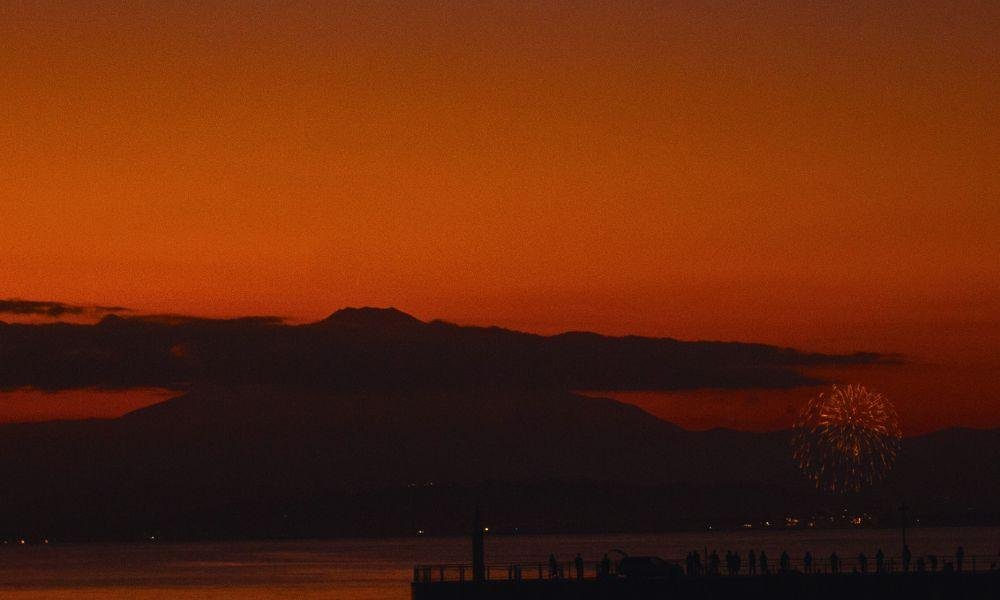
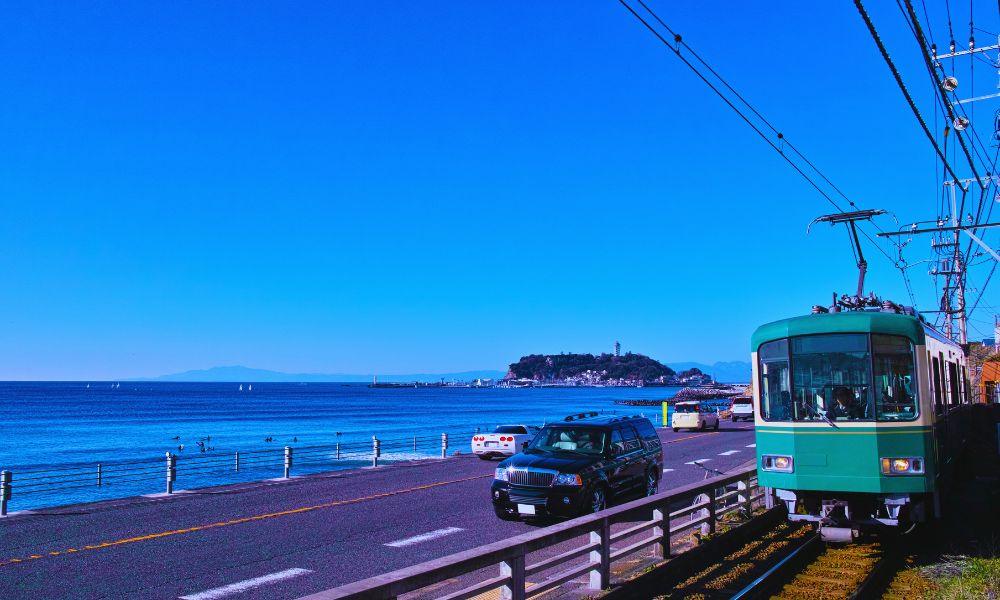
You cross the long pedestrian bridge from Katase-Enoshima Station. If you’re pushing a stroller like I usually was, brace yourself. It’s long, exposed, and there’s zero shade the whole way across.
The bronze torii greets you almost the second your feet hit the island. This torii was rebuilt in 1936 and donated by the head of a koto music school, which tracks nicely given Benzaiten’s whole music thing. Push through the shopping street after that, past the shirasu stalls and the giant octopus rice crackers everyone photographs, and you hit your first real decision: stairs on the right, paid escalator on the left.
Zuishin-mon Gate and the Climb to Hetsunomiya
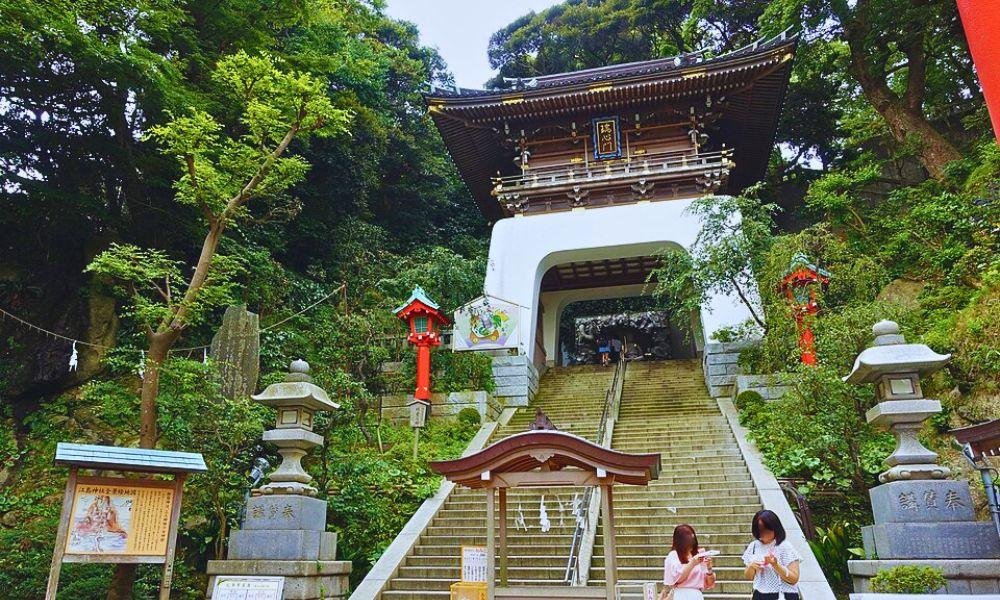
Take the stairs and you’ll pass under the Zuishin-mon gate, which is a great photo spot. Somewhere near here is a stone carving of Benzaiten and Gozuryu together, commissioned for the shrine’s 1,450th anniversary.
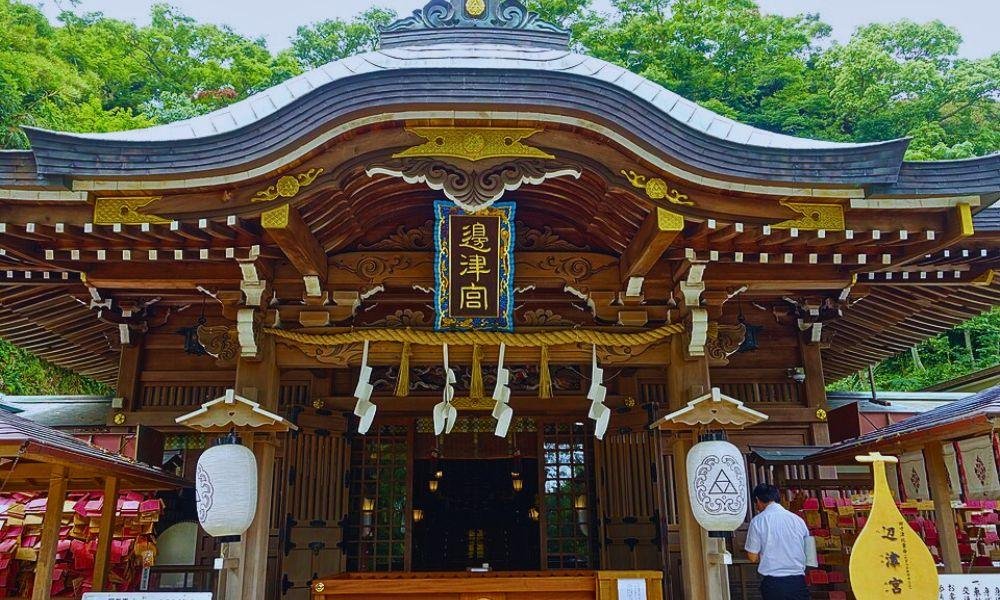
Keep climbing and you reach Hetsunomiya, the main and most photographed of the three shrines, originally built in 1206 and rebuilt in 1976. There’s a coin-washing pond here with a dragon statue at its center, and local belief says dunking your coins doubles your fortune. Baskets are provided so you don’t have to actually submerge your wallet.
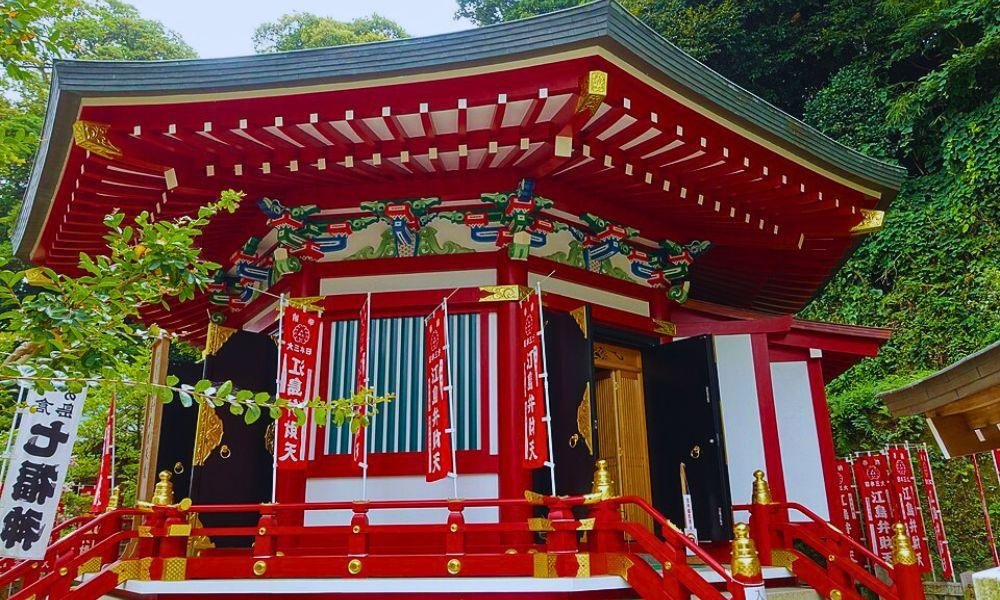
Next door is the Hoanden, a small octagonal hall that costs an extra ¥200 to enter. Inside are two Benzaiten statues worth the coin. Happi Benten has eight arms and is nearly 800 years old, carved from cypress. Myoon Benten is shown nude, playing a biwa, but this is a fairly standard way this goddess gets depicted in traditional art, so don’t be startled by it.
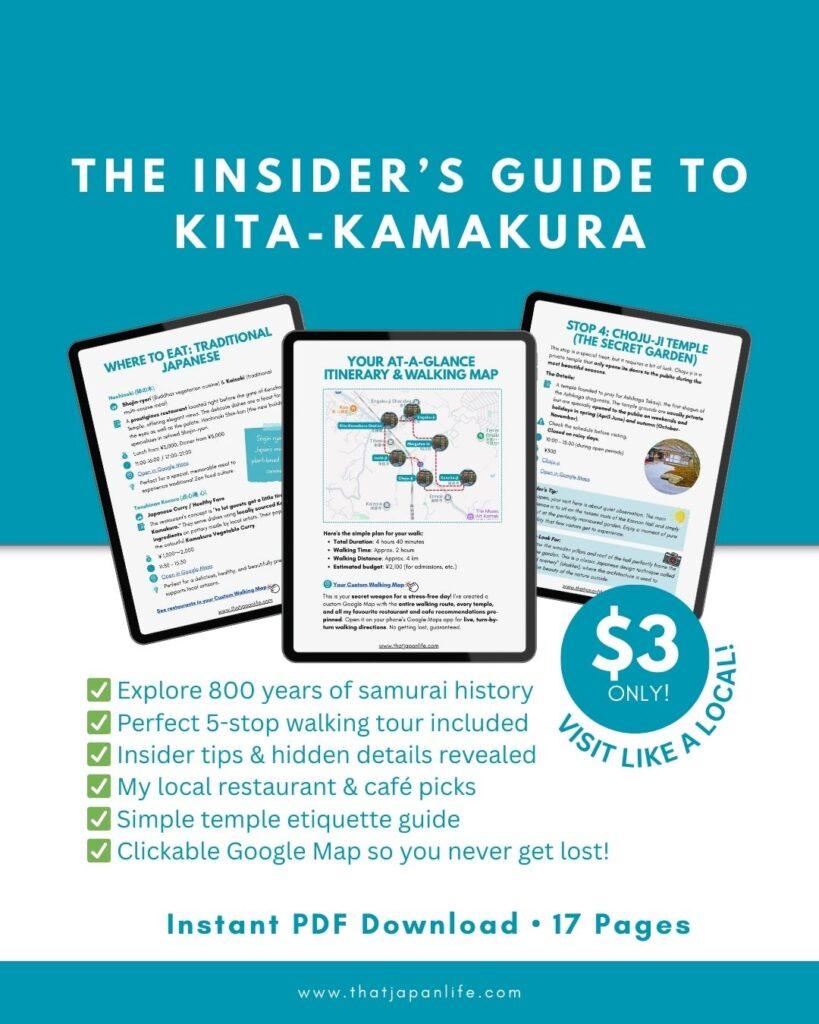
Want to make your day completely effortless?
I’ve bundled this entire tour, a clickable Google Map with my favorite local lunch spots pinned, and tons of insider tips into my beautifully designed 17-page Insider’s Guide to Kita-Kamakura PDF for just $3!
It’s everything you need for a perfect day, ready to use offline on your phone.
Nakatsunomiya, the Vivid Vermilion Middle Shrine
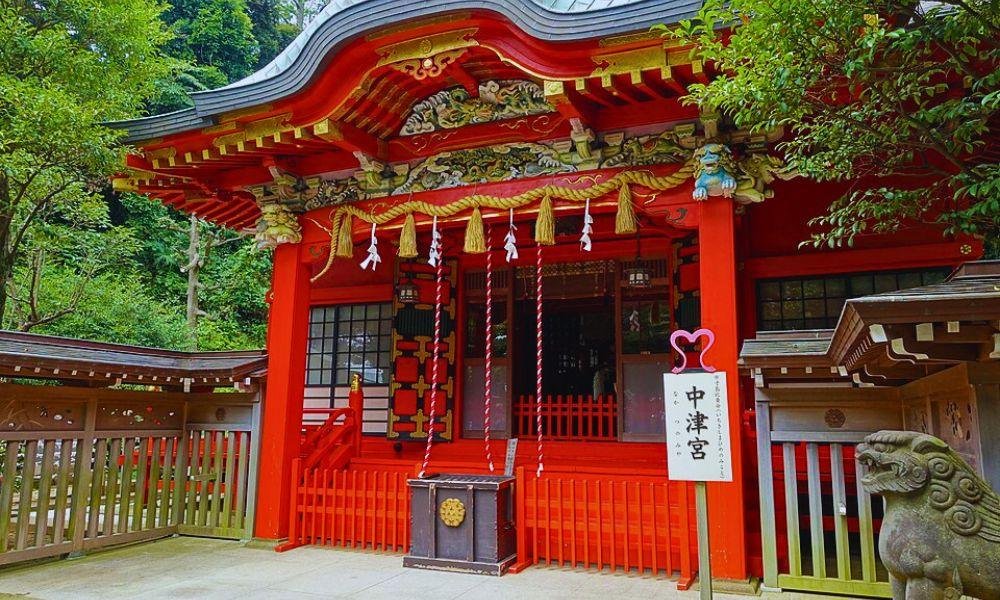
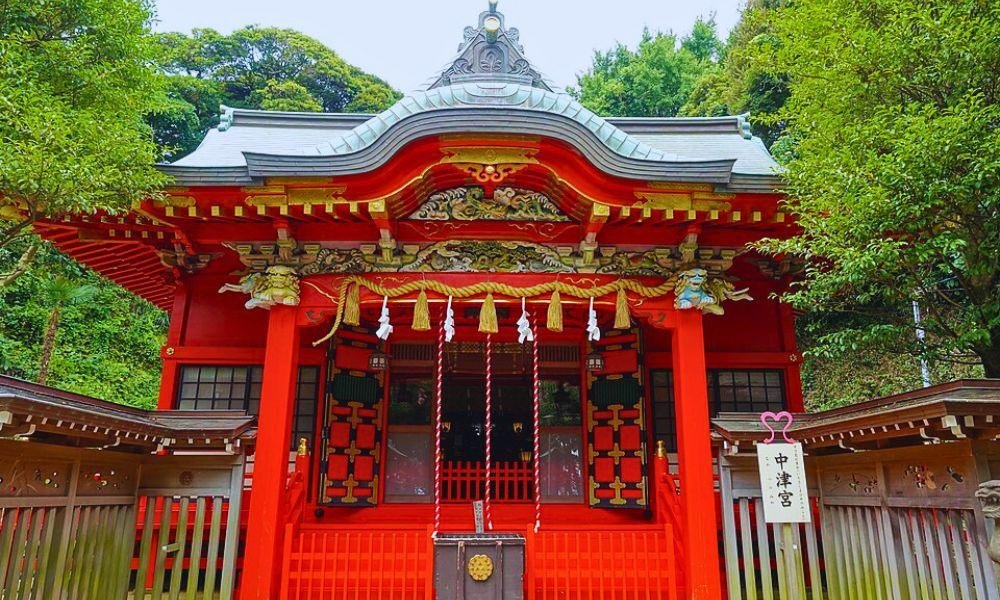
Keep climbing, or hop the second section of the escalator, and Nakatsunomiya shows up painted a much brighter red than Hetsunomiya. Founded in 853 by the priest Jikaku Daishi, it was last repainted in 1996, hence the vividness.
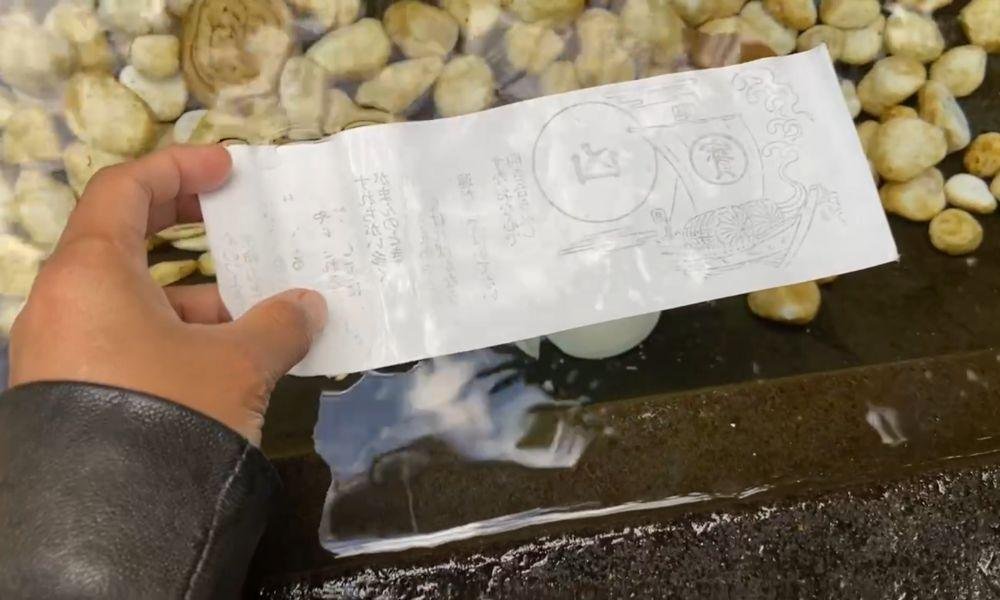
This is where you can grab a mizu mikuji, a water fortune slip running around ¥100. Dunk it in the stone basin just behind the shrine and watch the characters slowly appear over about ten seconds. Never fails to impress a kid who’s never seen invisible ink before. Mine made me buy him three the first time we tried it.
Look around the grounds too. Stone lanterns donated by Kabuki theaters active during the Edo period sit here quietly while most visitors walk straight past without clocking them.
The Detour to Ryuren no Kane, the Dragon’s Love Bell
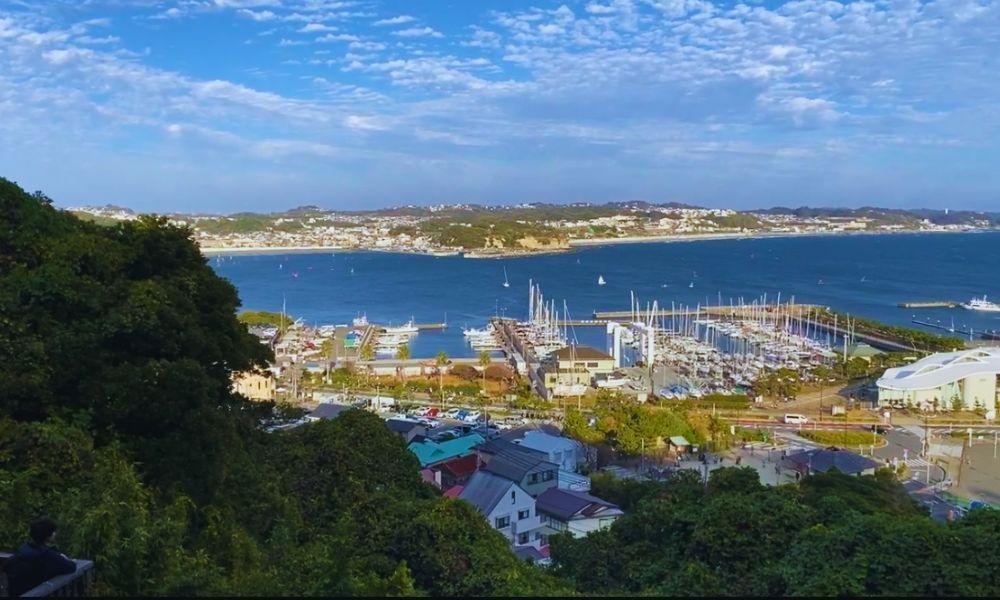
A lot of guides skip this one, which is a shame. From around Nakatsunomiya, a path climbs up to what people call Lover’s Hill, home to Ryuren no Kane, a bell built specifically around the Benzaiten and Gozuryu romance.
Couples ring it together and hang a padlock as a symbol of their commitment, and if you didn’t bring your own, the shops nearby sell them. There’s also a rack of pink ema here for love wishes specifically, tying straight back to the dragon legend.
Even skipping the romantic angle, the view from here stretches toward Izu Oshima on a clear day, so pausing here is a good excuse to let your calves recover.
Past Samuel Cocking Garden and the Sea Candle to Okutsunomiya
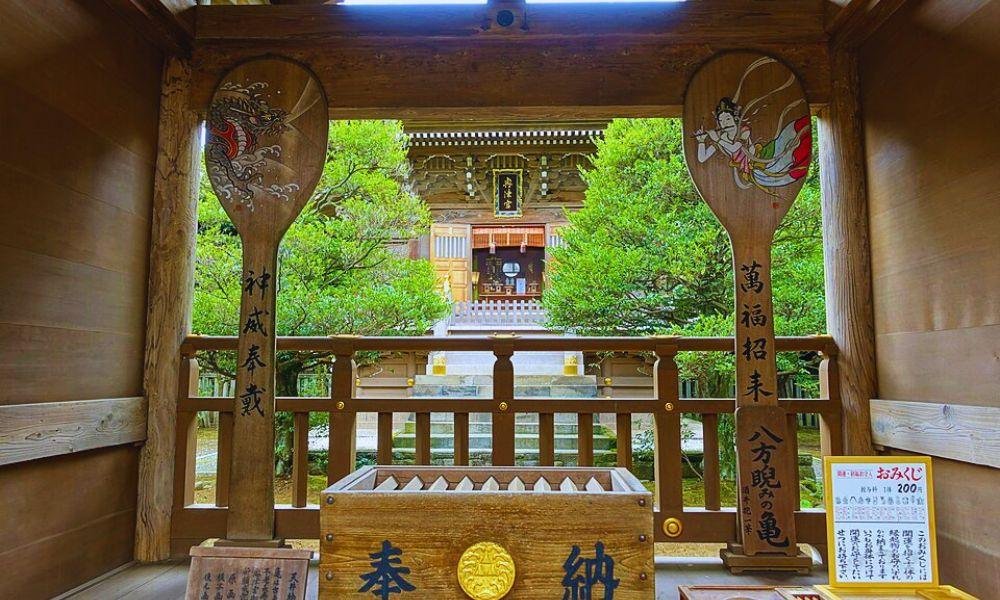
Push on and you’ll pass Samuel Cocking Garden, mixing Japanese and European planting styles, with the Sea Candle lighthouse rising above it. Both charge separate entry, though the tower is visible from outside for free if you’re trying to keep costs down.
Keep going and you finally reach Okutsunomiya, the highest and most weathered of the three shrines. Nobody’s even entirely sure when it was first built. Up here, it’s quieter. Rougher around the edges too, nowhere near as postcard-ready as Hetsunomiya. This was technically the original main shrine before the complex split into three, so this humble little building probably deserves more attention than it gets.
The Iwaya Caves, Where Enoshima Shrine’s Story Actually Begins
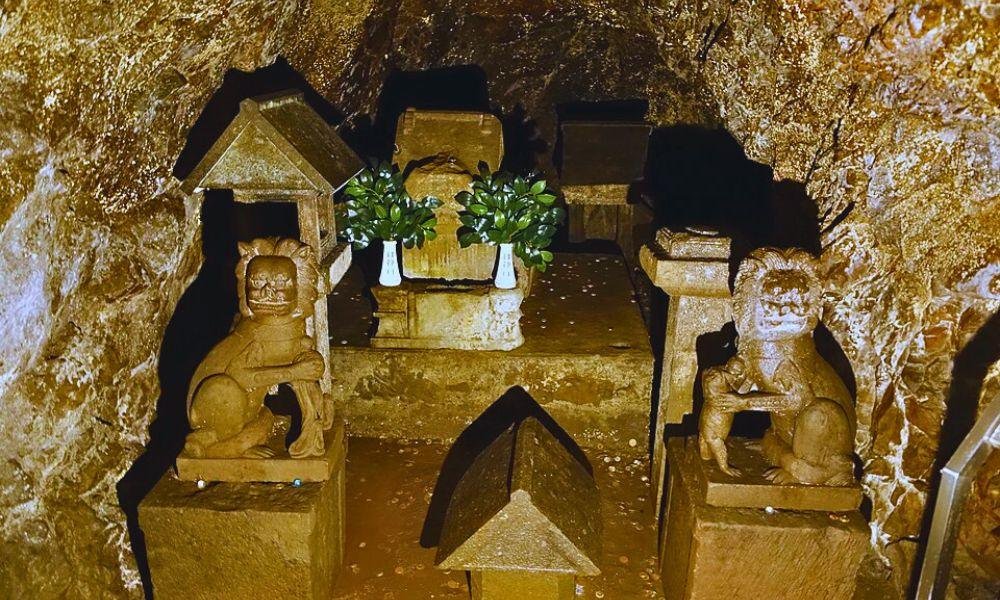
From Okutsunomiya, the path winds down toward the Iwaya Caves on the island’s back edge, right where the ocean has been chewing into the rock for centuries. This is where Enoshima’s story actually starts.
Legend says Benzaiten first descended here, and Emperor Kinmei ordered a shrine built next to the caves back in 552 AD, long before anything existed up on the hill. Back in the present, entry to the caves runs around ¥500 and closes at 5pm sharp, so don’t save this for the tail end of your day like I mistakenly did once.
Inside, you walk by candlelight past stone statues and a small shrine, with a passage that legend claims leads toward Mount Fuji. It’s damp, a little eerie, and somehow still my son’s favorite part of the entire island.
From here, you’ve got two options back. Retrace your steps, or catch the Bentenmaru pleasure boat to the main bridge, since the escalator only runs one direction, straight up.
Where to Get Omamori, Omikuji, Ema, and Goshuin at Enoshima Shrine
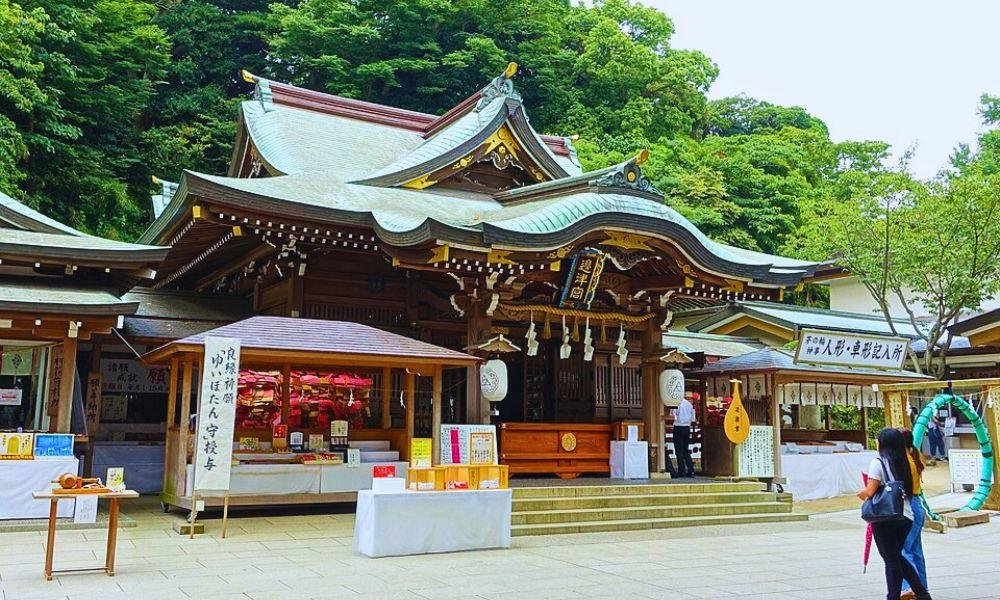
The main shrine office sits near Hetsunomiya and opens from 8:30am to 5pm. This is your spot for omamori, and Enoshima’s biggest sellers are tied to love, beauty, and money, matching exactly what Benzaiten covers.
This office also sells standard omikuji if you’d rather skip the water fortune down at Nakatsunomiya. Pull a bad one and tie it to the wire rack near the hall instead of taking it home. Don’t argue with the goddess.
Ema, the wooden wish plaques, are sold both at the main office by Hetsunomiya and up at Ryuren no Kane if you want the pink love-themed version. Write your wish, hang it on the rack, that’s it.
Goshuin, the stamps collected in a special book called a goshuincho, run somewhere between ¥300 and ¥500 depending on the design. Each of the three shrines has its own, so completists (like yours truly) can rack up all three in one visit.
Practical Tips for Visiting Enoshima Shrine With Kids (or Just Tired Legs)
Here’s what I genuinely wish someone had warned me about before my first trip here with a toddler. The Enoshima Escar, the outdoor escalator system, runs in four sections and goes up only, never down. One section costs ¥100, all four costs ¥360. The escalators run from 8:50am to 7:05pm.
Each section drops you right near a different landmark, so you don’t need the whole ride if you just want a lift between two specific points. Fair warning though, on a busy weekend the queue for the first section can back up past the shopping street.
For a family pace, block out closer to three hours when visiting the shrine. Kids burn out fast on all the climbing and walking. Also be sure to bring drinks, since refill points thin out fast once you’re past the shopping street.
Transform your visit from a simple walk into an unforgettable adventure with my Complete Tsurugaoka Hachimangu PDF Guide.
And do not be the parent who tries to bring a stroller past Zuishin-mon, especially when there is an area to park strollers near the first escalator! I learned this one the hard way, stroller folded and balanced on one hip, kid on the other, sweating through my shirt while an elderly local watched with what I can only describe as polite pity. Carrier or baby backpack. Every time.
When to Visit and How to Get to Enoshima Shrine From Tokyo or Yokohama
Take the Odakyu Line to Katase-Enoshima Station, the most direct route from Shinjuku and an easy connection from Yokohama as well. From the station it’s a short walk across the bridge onto the island.
Weekday mornings are your best shot at breathing room. Weekends and holidays pull serious crowds out from Tokyo, and those narrow stairways up to Hetsunomiya get genuinely tight by early afternoon, elbow to elbow with strangers all trying to photograph the same lantern.
If a goshuin is on your list, remember the office shuts at 5pm sharp, so climb with that clock running in the back of your head instead of saving it for last like some kind of optimist.
Good shoes, some cash for the smaller shrine offices, and more time than the map tells you. This island always runs longer than it looks.