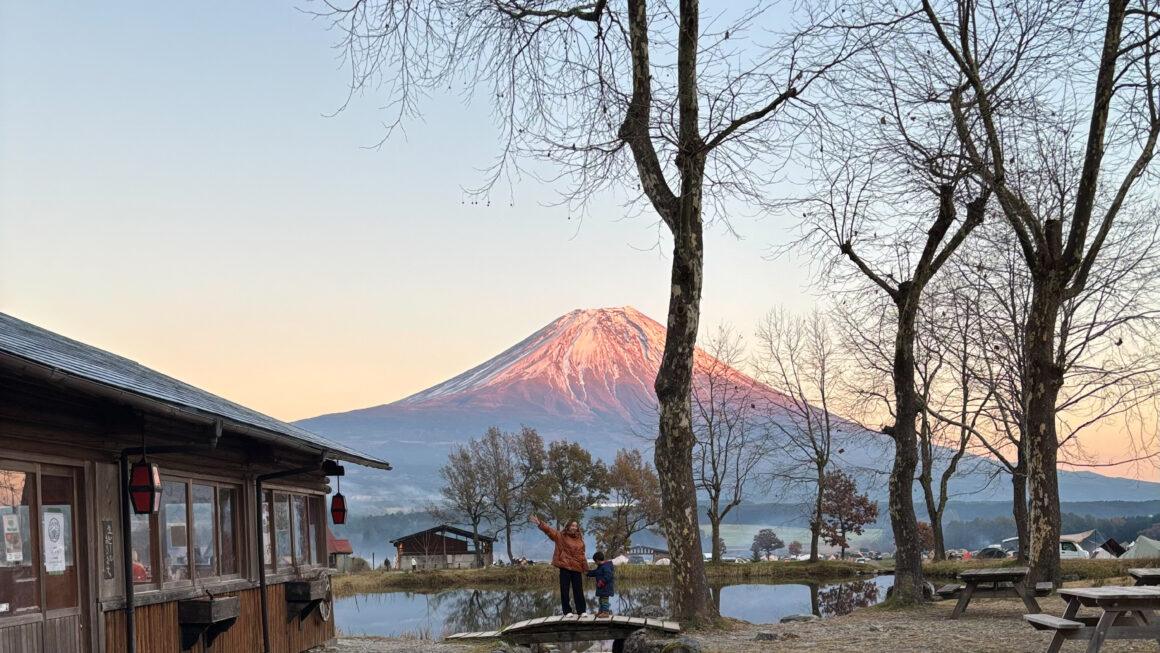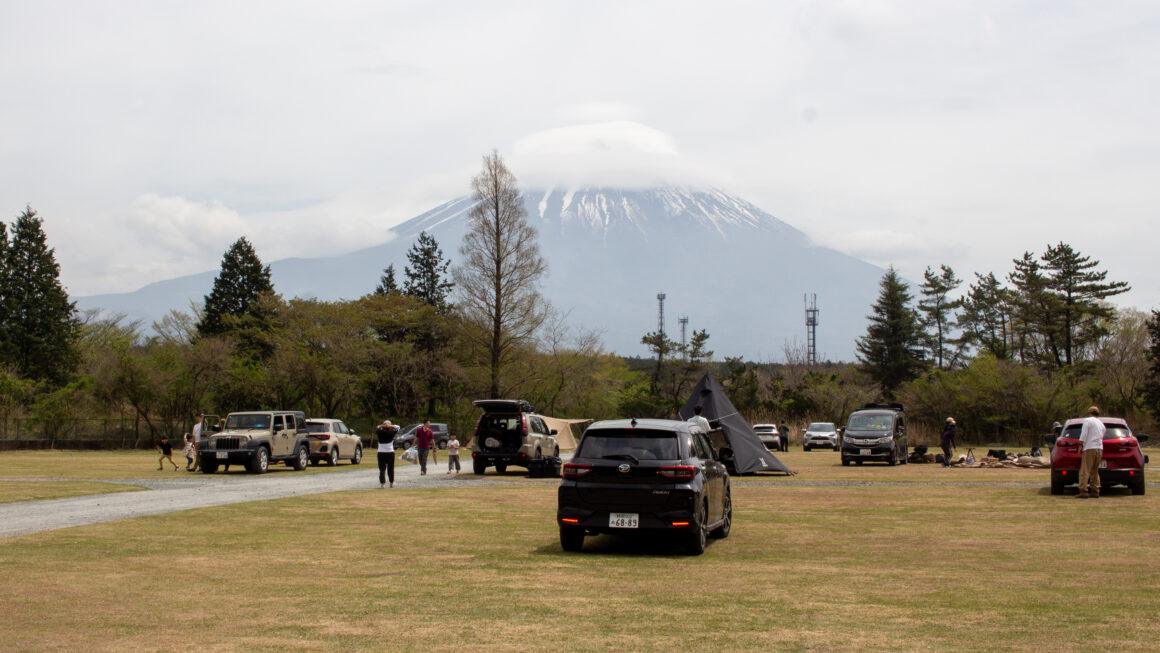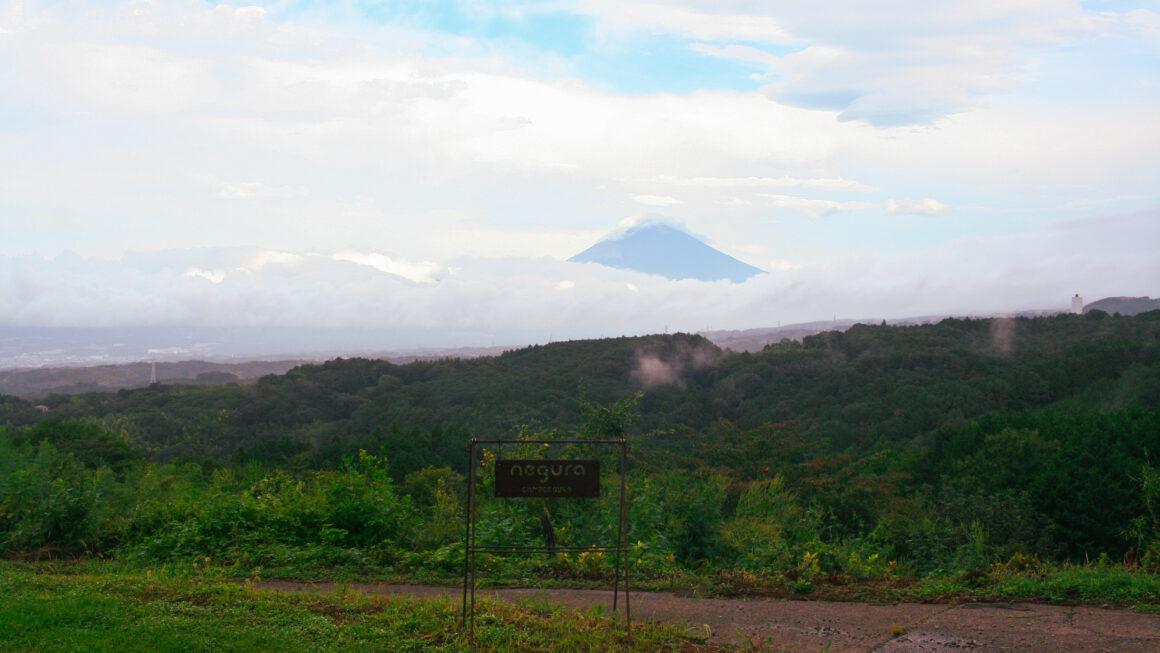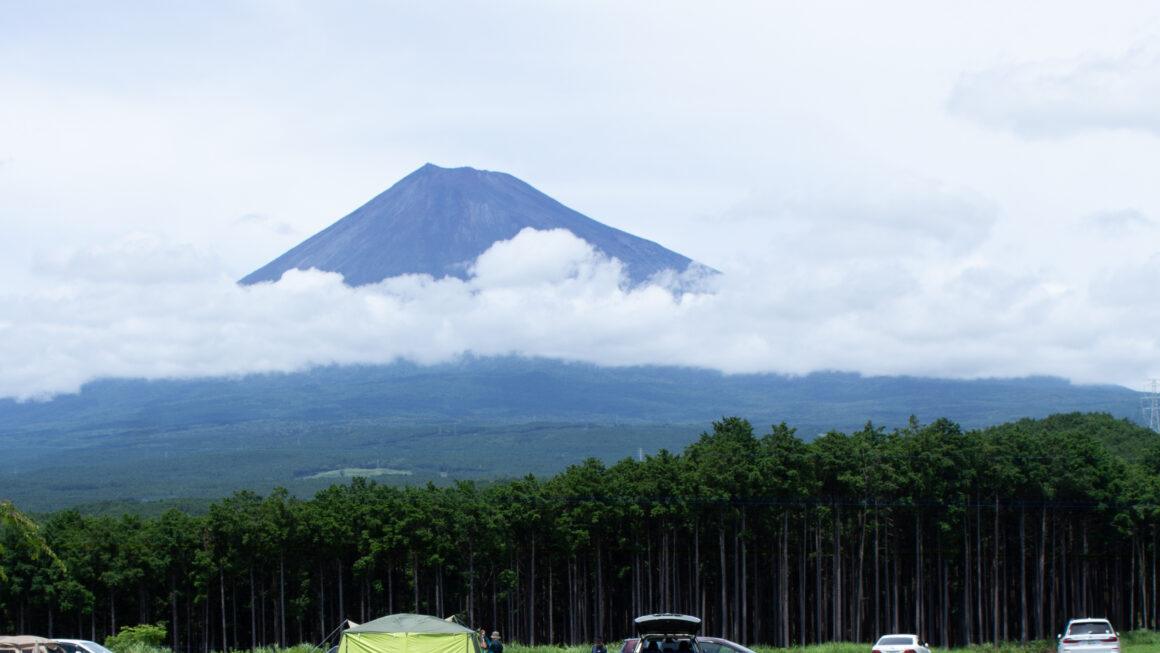
We booked Fujiminooka Auto Camp Field on a whim because a friend sent me a photo of Mt. Fuji sitting right behind someone’s tent, and I basically stopped scrolling and texted her “wait, where is this.” Turns out it’s a hillside campsite in Fuji City, Shizuoka, that opened back in January 2021 and has quietly become one of the spots expat families ask me about most.
I went with my son, who was 5 at the time, along with three other camping families we’re close with, kids ranging from 3 to 11. Three days, two nights, a full pack of children running around a field with Mt. Fuji watching over all of it. I have thoughts, good and not so good, and I want to walk you through everything before you book, because a few things caught me off guard.
Quick Facts About Fujiminooka Auto Camp Field
The address is 静岡県富士市大淵1297 (417-0801), up on a hill in Ōbuchi, Fuji City. The site is roughly the size of Tokyo Dome, which sounds like a strange unit of measurement until you’re actually walking across it with a cooler, and there are 160 car sites in total, so it’s not some tiny 20-spot field.
Site check-in runs 12:00 to 17:00, check-out 8:00 to 12:00. If you’re in the free site area instead of a numbered site, check-in is 11:00 to 17:00 and check-out is 8:00 to 11:00. Day campers (11:00 to 17:00) pay ¥1,500 per adult and ¥500 per child under 15.
One thing that genuinely tripped up a friend in our group: the gate locks between 18:00 and 8:00. Once you’re in, your car is in too. No late arrivals after dark, no popping out for a midnight convenience store run. Plan your grocery and firewood shopping before you get there.
Also worth knowing before you fill your water bottle: the tap water is natural well water. It’s tested, but the campsite’s own rules say not to drink it raw, boil it first.
Getting to Fujiminooka Auto Camp Field

Fujiminooka Auto Camp Field is about a 10 minute drive from Shin-Fuji IC on the Tōmei Expressway, which is genuinely one of the easiest camp accesses I’ve dealt with in Shizuoka. Supermarkets, convenience stores, and even a public bathhouse are all within about 10 minutes of the gate too, so if you forgot something (you will forget something) you’re not driving 40 minutes to fix it.
If you’re coming without a car, the nearest station is Shin-Fuji, on the Tōkaidō Shinkansen. I’ll be straight with you here: the campsite doesn’t list an official taxi time or fare from the station anywhere on their site, and neither do the third-party camp listings I checked. Given the IC is about 10 minutes out, budget a similar taxi ride and just confirm the fare when you book, rather than trusting a number some blog throws out. I’d honestly recommend renting a car for this one if you can, since the site is spread out and you’ll want your own vehicle right next to your tent anyway.
Every site is designed for cars to park directly next to your tent, which is a small thing that makes a huge difference when you’re hauling gear with a toddler attached to your leg. Just know that oversized vehicles, so campers and trailers over 5 meters long or 2 meters wide, get an extra ¥2,000 charge, and the campsite politely asks that you don’t block other guests’ views with them. Drive slow once you’re inside too, it’s a 15km/h limit on the internal roads.
Site and Accommodation Options at Fujiminooka Auto Camp Field

There’s a real range here depending on your budget and how much you want to rough it.
The numbered sites are the ones with actual reserved spots, and they come in three tiers with names that made me laugh the first time I read them. The Premium “1 Million Dollar” site is ¥18,000 a night, the standard “1 Million Dollar” site is ¥8,800 a night, and the “50K Dollar” site, which comes with AC100V power, is ¥10,000 a night. I assume the naming is a nod to the “million dollar night view” from the hill, and honestly it fits once you’ve seen it.
Then there are the free sites, which is where our group camped. It’s ¥6,000 a night for one car plus one tent, ¥4,000 if you’re arriving by bike or on foot with one tent, and ¥3,000 for every additional tent beyond that. Large vehicles add ¥2,000 regardless of which site type you pick.
The newest addition, which opened in May 2025, is glamping. Two cabins called GRAND HILLS Fuji and GRAND HILLS Suruga sit on the property now, each with its own private open-air bath that looks out at Mt. Fuji and the night view. You can book room-only or a plan with breakfast and dinner included. If you’ve got a partner or friend who insists camping isn’t their thing, this is genuinely a solid compromise, since you get the same view without a sleeping bag involved.
One thing I’d flag from the free site reviews I read while researching this: there’s no shade out there. Bring a tarp no matter what season you’re going in, and if it’s summer, bring it anyway, because you will need it.
Fujiminooka Auto Camp Field Pricing

To lay it out clearly, since these numbers matter when you’re planning a group trip like we did:
- Numbered sites (per night): Premium site ¥18,000, standard site ¥8,800, powered site ¥10,000
- Free sites (per night): car + tent ¥6,000, bike/walk-in + tent ¥4,000, each extra tent ¥3,000, large vehicle surcharge +¥2,000
- Day use (11:00–17:00): adult ¥1,500, child under 15 ¥500
High season rates apply during Golden Week, Obon, and New Year, and the campsite asks you to contact them directly for those specific numbers rather than publishing them outright. And a policy worth knowing before you book: once you’ve checked in, there are no refunds if you cancel, so don’t lock in a date you’re not sure about.
Fujiminooka Auto Camp Field Facilities

This is the section I feel like I have the most to say about, because facilities are where camping trips actually succeed or fall apart with kids.
The toilets have heated seats, which sounds like a small luxury until you’re using one at 6am in October, and they’re usable at night too, which matters more than people think when you’ve got a kid who needs to go at 2am. That said, from what I read in other campers’ reviews and confirmed with my own experience, there’s really just the one toilet block for the whole site, so it can get busy at peak times.
Showers are free and reservation-based, individual rooms rather than a shared bathhouse setup. I want to be upfront that ours weren’t the cleanest showers I’ve used at a Japanese campsite, and I don’t know if it was just an unusually busy weekend when we went. There were also bugs, and not the harmless kind. Something with disturbingly long legs kept getting into the shower room through gaps around the door, and I spent more of my shower time dodging it than actually washing.
By the second night, a few of us just drove to a nearby onsen instead and called it a win. I believe there are only 3 or 4 shower rooms total (worth double checking on their site before you go, since this kind of thing changes), so in the evening when everyone, Japanese guests included, wants to shower at once, you’ll wait. Water pressure was good and the rooms felt private enough, I just wasn’t expecting the insect situation.
The kitchen area has hot water, one of the best perks here if you’re camping in cooler months and don’t want to wash dishes in freezing water. There’s also a powder room, and a shop in the management building open 10:00 to 17:00 selling firewood, charcoal, CB and OD gas canisters, drinks, snacks, and instant noodles if you’re missing something.
Then there’s the pool that is free to use during the summer season. It’s the inflatable tarp kind, not a proper concrete pool, so don’t expect anything huge or pristine. But it kept a pack of kids ages 3 to 11 entertained for hours, and having showers right next to it meant we could rinse everyone off before they tracked mud back to the tent.
One gap I need to mention because I looked for it specifically: there’s no wifi mentioned anywhere on the official site. Assume you won’t have signal-independent internet and plan accordingly.
Honest Review of My Experience at Fujiminooka Auto Camp Field

I think this campsite is genuinely great for families, especially in summer, mostly because of that pool. It’s popular enough that there were a lot of people there when we visited, and our group of four families ended up making friends with other kids who weren’t even part of our party, which is exactly the kind of thing you hope for when you drag a 5 year old camping.
The view is the real reason to come though. My favorite version of Mt. Fuji has always been the one with snow on top, so I wasn’t expecting much from a summer visit, but the mountain still looked incredible without the cap. The woods at the base frame the bottom of it in a way that makes the whole scene feel complete even without snow. It’s become one of my favorite Mt. Fuji view campsites, genuinely.
I wasn’t as blown away by the night view, though I think that’s partly because we weren’t camped in the section with the best angle for it. From where we were, it mostly read as distant city lights rather than anything dramatic. During the day, though, the contrast between the bay and the city view was one of my favorite parts of the whole trip.
Should You Go to Fujiminooka Auto Camp Field

If you’ve got young kids, want a Mt. Fuji view without an hour of driving from Tokyo, and don’t mind a shower room adventure or two, I’d say go for it, especially in summer when the pool is running. The 10-minute drive from Shin-Fuji IC makes it accessible even if you’re not a confident long-distance driver yet, and the free site pricing is reasonable for what you get.
If you’re someone who needs spotless bathrooms or guaranteed wifi, or you’re hoping for shade without setting up your own tarp, this might frustrate you. And if a private bath and zero bug encounters matter more to you than saving money, the new GRAND HILLS glamping cabins are there specifically for that.
Either way, check the current pricing and shower situation on their site before you book, camps like this update things fairly often, and I’d rather you go in with accurate numbers than whatever I saw on my visit.