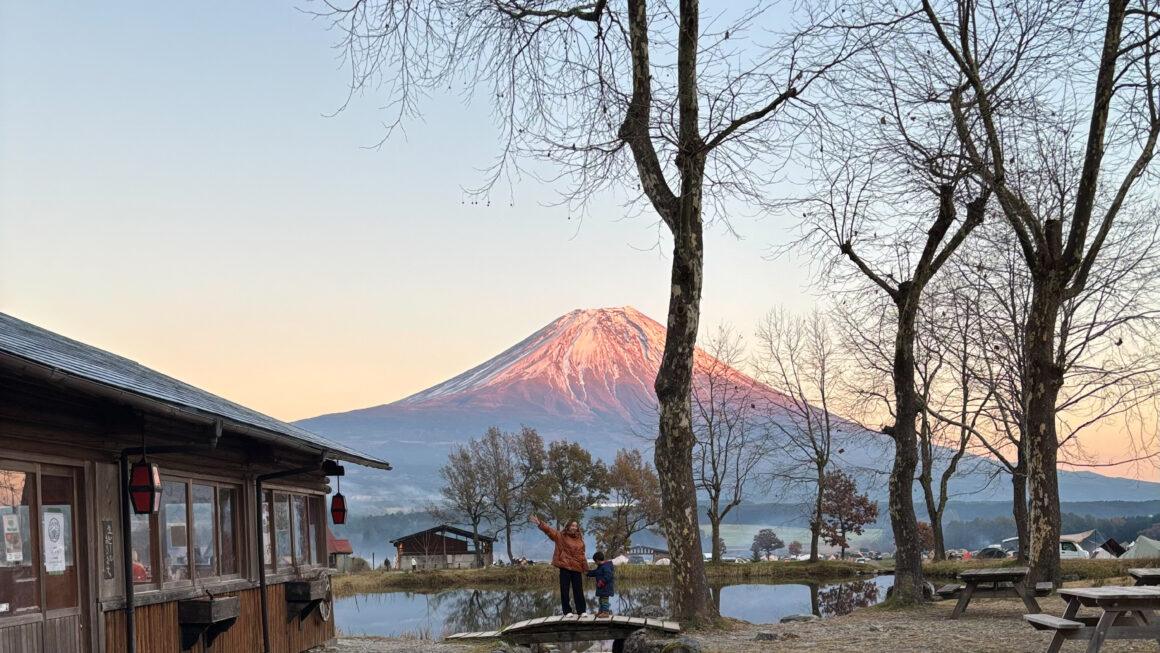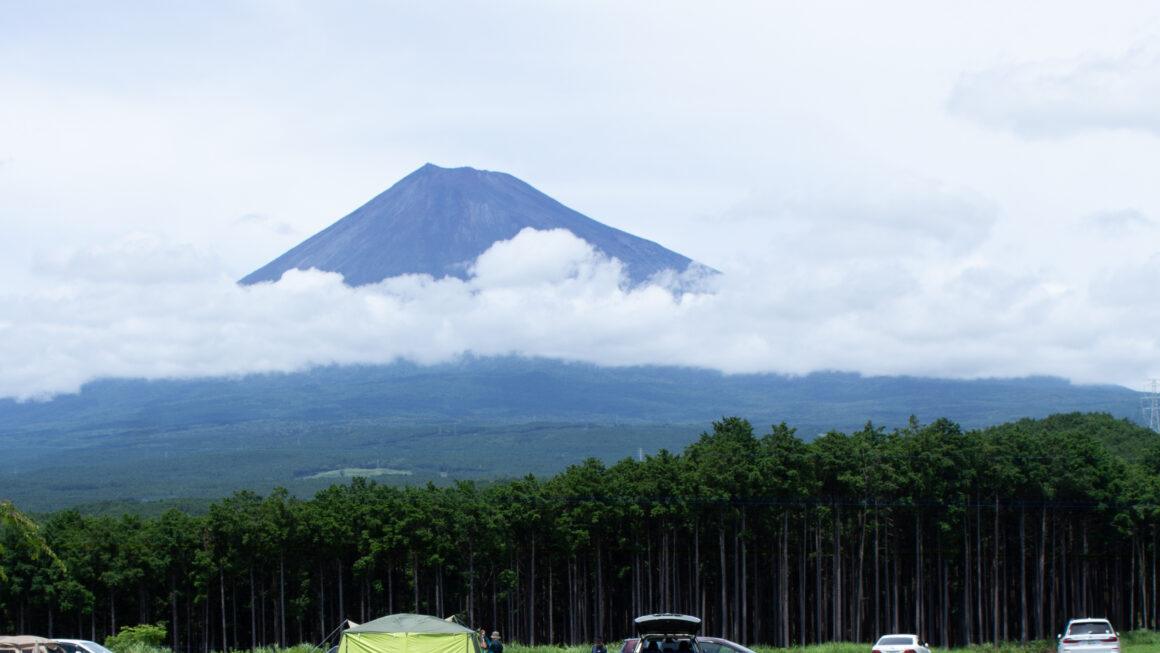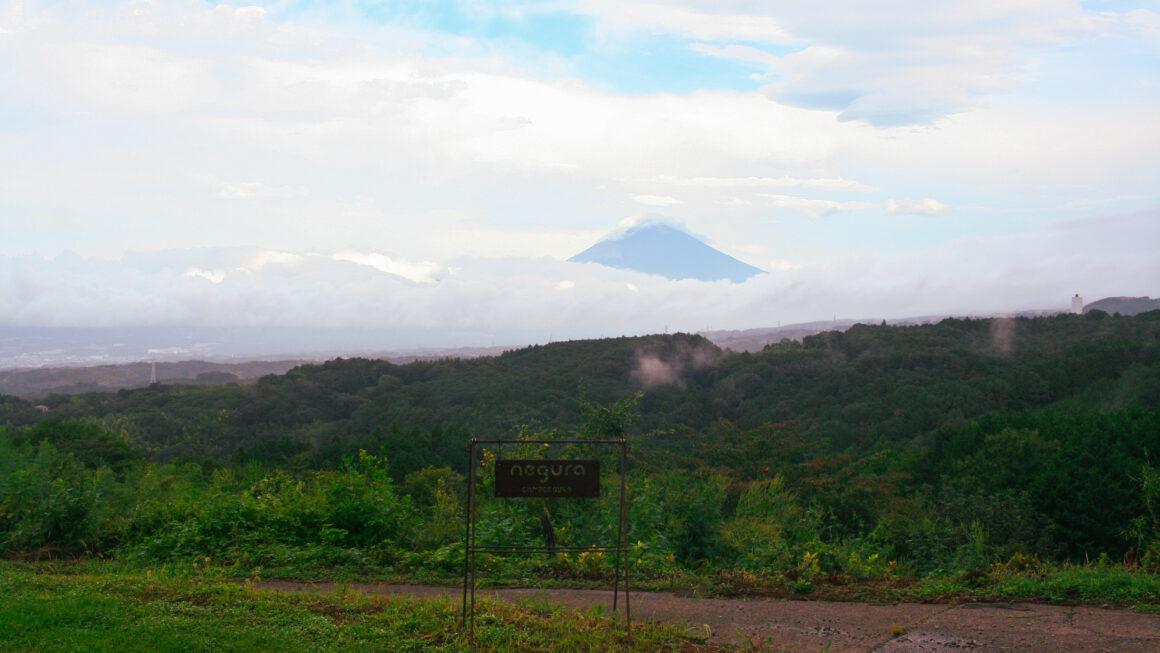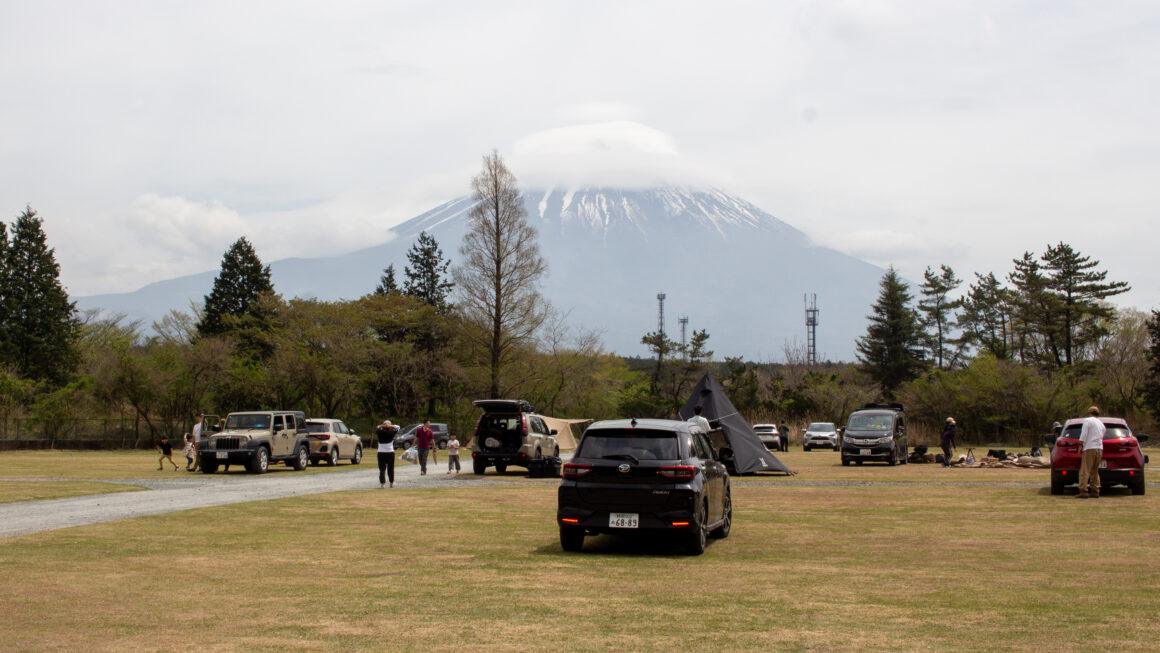
If you’ve been scrolling Japan camping accounts and keep seeing that impossibly green field with Mt Fuji floating behind it, there’s a good chance it’s Asagiri Camp Base Sorairo. I took my 5-year-old there for two nights and I want to walk you through what it’s actually like, not just the polished shots, because there are a few things I wish someone had told me before I booked.
Asagiri Camp Base Sorairo opened in July 2023, run by Toyota United Shizuoka (yes, a car dealership group runs a campsite, and no, there’s zero car branding anywhere once you’re inside). It sits at 800 meters elevation on the Asagiri Kogen highlands in Fujinomiya, right next door to Fumotoppara, the campsite every serious Japan camper already knows. Sorairo was clearly built to be the friendlier, more polished neighbor.
Quick Facts About Asagiri Camp Base Before You Book
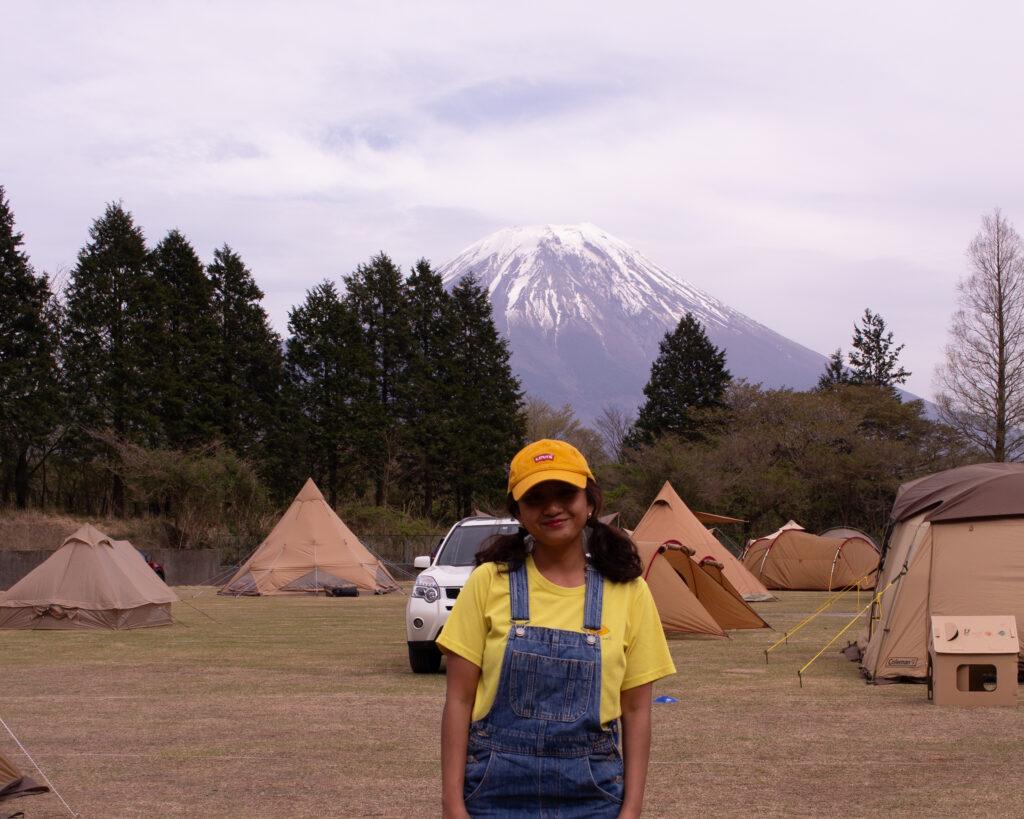
The elevation is doing real work here. Even in the middle of summer, mornings and evenings sit around 22 to 23°C, which after a sweaty Yokohama or Tokyo week feels like stepping into a different country. Pack layers anyway, because once the sun drops it gets properly cold, cold enough that I was putting a jacket on my kid at 7pm in July.
Check-in and check-out depend on the season. In normal season, free-pitch sites check in from 10:00 and check out by 14:00. During peak periods like Golden Week, New Year, or three-day weekends, that shifts to check-in at 12:00 and check-out at 11:00. If you book one of the powered or sectioned sites, it’s always 12:00 check-in and 11:00 check-out, no matter the season. Read your confirmation email carefully, because showing up at the wrong time means waiting around.
Payment is flexible: cash, credit card, e-money, and QR codes are all accepted, though the campsite clearly wants you to go cashless. There’s also a management fee of around ¥550 per adult that kicked in from August 2024, which covers your trash bags and gets you free access to the showers, though I’d confirm this is still the current setup before you go since these small fees tend to shift.
The site is only closed on Thursdays, and only during December through February, so this is basically a year-round operation.
Getting to Asagiri Camp Base Sorairo
This is a car campsite, full stop. There’s no train station nearby and the official site doesn’t list bus access, which makes sense once you’re actually there and see how remote and open the highlands feel.
If you’re coming from Tokyo or Yokohama without a car, renting one is really your only realistic option, or arranging a taxi from Fujinomiya Station, though that’s going to be a long and pricey ride given the driving times below.
By car, you’re looking at about 40 minutes from Fuji IC on the Tomei Expressway, about 35 minutes from Shin-Fuji IC on the Shin-Tomei, or about 40 minutes from Kawaguchiko IC if you’re coming from the Chuo Expressway side. All three routes are well signed and easy for a nervous foreign driver to follow.
Now, before you wake up early to make your way there, you should know that the entrance gate closes from 18:00 to 9:15 for security, and during that window you cannot get in or out. This also means that if you’re the type who likes a late convenience store run after the kid’s asleep, you should plan around this. Parking is ¥2,200 per car, and you need one reservation per vehicle if you’re bringing two.
Asagiri Camp Base Sorairo Site and Accommodation Options
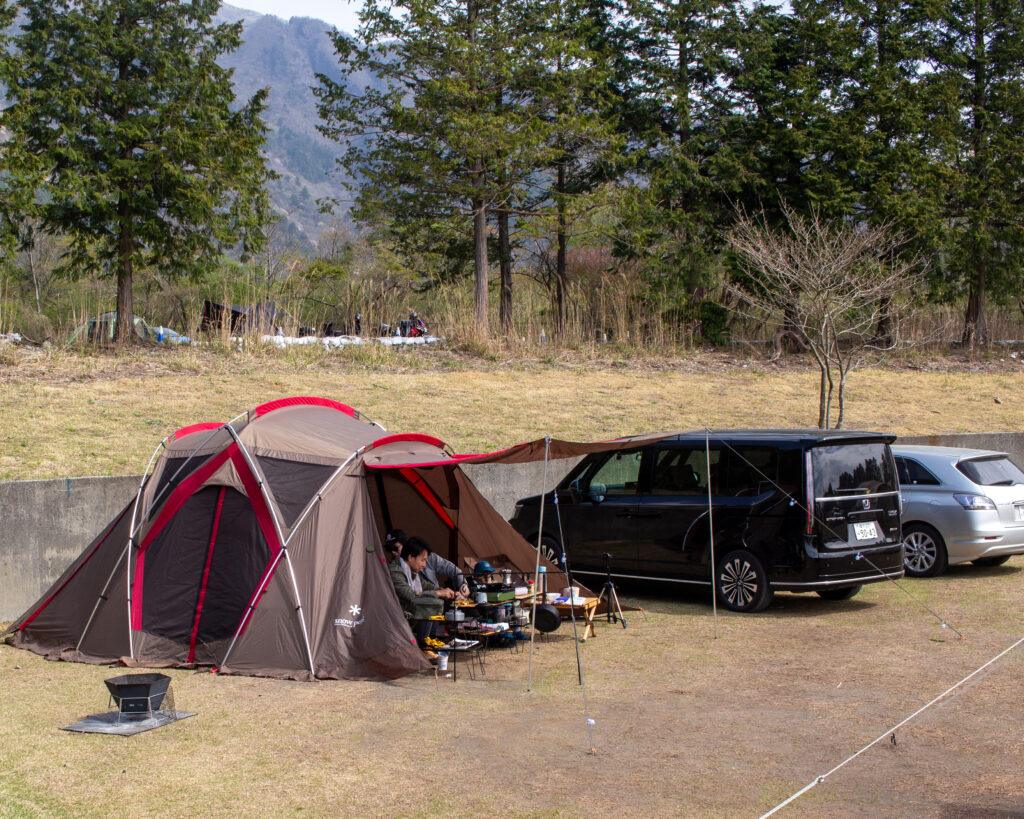
Mattari sits right in front of the management building across two tiers, upper and lower. This is also where all six powered sites live, so if you need an outlet for a heater or want to be five minutes from the bathroom with a toddler, this is the practical choice.
Yuttari is the biggest of the four areas by footprint, flat and tree-lined. It also contains four of the six hirobiro wide sites at 300 square meters each, so if you want extra space without paying for Shippori’s terraced premium plots, this is where to look.
Doppuri used to be a baseball field, and the diamond shape means Fuji is visible from nearly anywhere inside it, which is probably why it’s one of the more requested areas.
Shippori sits at the far end of the property with both Fuji and Mount Kenashi in view, and it’s the quietest of the four. Its two hirobiro plots, Ajiwai and Katarai, are the ones raised up on the stone-wall terrace, which is likely what gave our stay that slightly less rustic, more built-up feel compared to open grass elsewhere on the property.
Asagiri Camp Base Sorairo Pricing
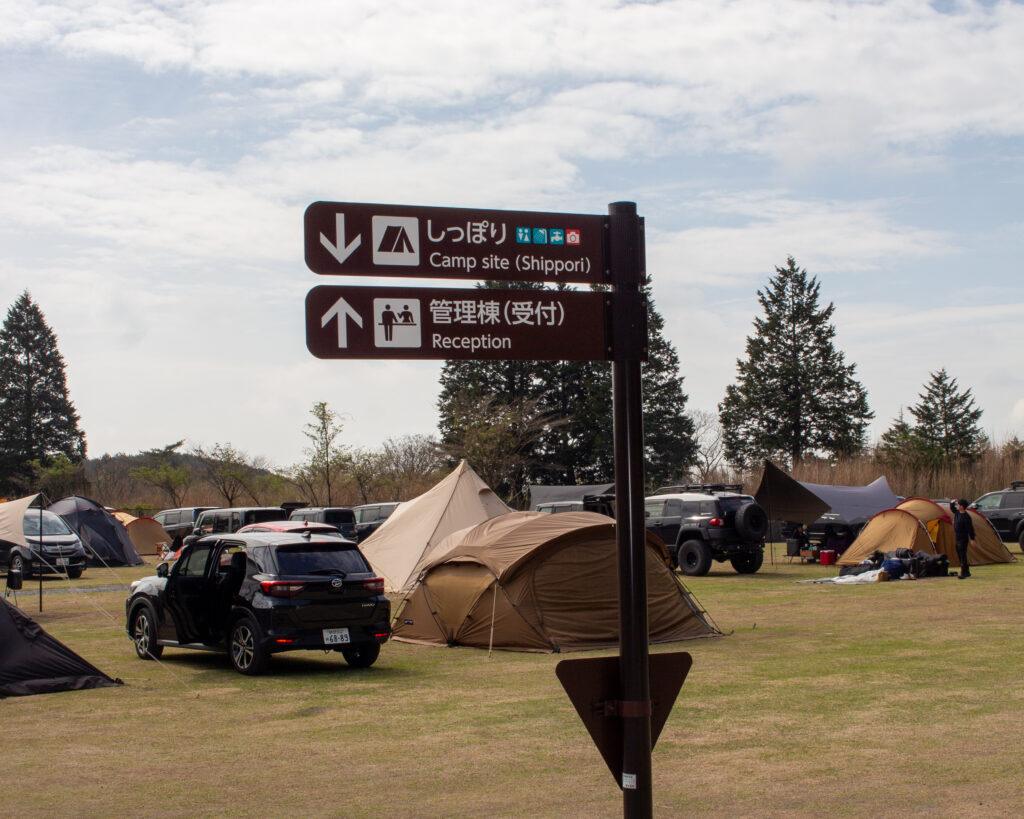
Sorairo prices by site type, not as one flat nightly rate.
Free-pitch sites (Mattari, Yuttari, Doppuri, Shippori) start at a base rate of ¥4,950, which already includes one adult and one regular car. Add a second adult and it’s another ¥2,750 per person, or ¥1,100 for a high schooler, and elementary school kids and under stay free. Swap in a campervan instead of a regular car and there’s a ¥2,200 change fee. So, a family of two adults and one young kid pitching a tent for one night lands at roughly ¥4,950 plus ¥2,750, around ¥7,700 before any options.
Powered sites (the six lots inside Mattari) run a base of ¥6,050 for one adult and one car, with the same ¥2,750 per additional adult and ¥1,100 per high schooler on top.
Hirobiro wide sites are the premium option, and there are six total across the property, four inside Yuttari at 300 square meters each, and two inside Shippori at 370 square meters each, the ones called Ajiwai and Katarai sitting up on that raised stone terrace. These run ¥13,200 to ¥15,400 as a base, which already covers four adults and two vehicles, making them genuinely built for group or extended-family trips rather than a couple. A fifth adult adds ¥2,750, and a third car adds ¥2,200.
Parking itself was revised in November 2024 to ¥2,200 per car, though for free-pitch and powered sites that’s already folded into the base rate for your first vehicle, you’re only paying it separately if you’re bringing a second car. Cancel from the day before your stay and you’re charged the full amount, so this isn’t a site where last-minute date changes are painless.
Asagiri Camp Base Sorairo Facilities Explained
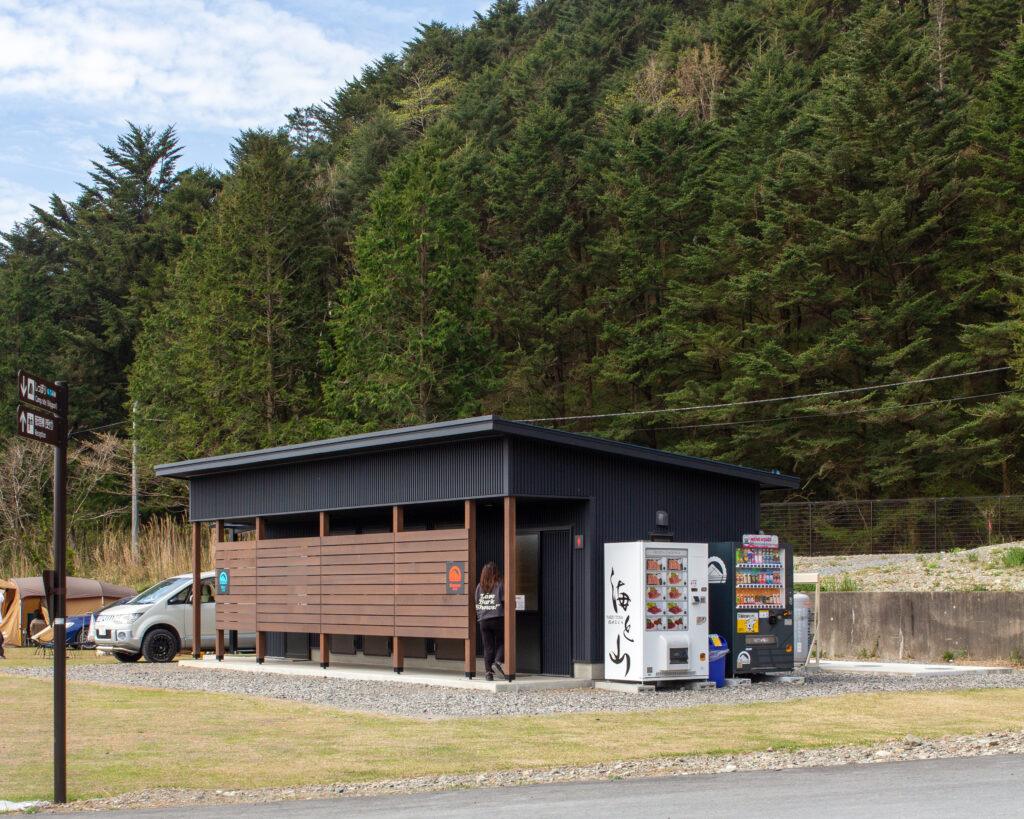
I think this is where Asagiri Camp Base Sorairo earns its reputation. Every area has its own sanitary building with washlet toilets, a kitchen sink area with hot water, and showers, and the management building itself has a multipurpose toilet with a diaper-changing table and wheelchair access, which I’m sure moms with a young kid would appreciate not having to hunt for.
Free wifi is also available, but only near the management building. If you’re pitched further out and need connectivity, you can rent a pocket wifi for ¥1,650 per night per unit, though there are only 10 available on a first-come basis. Seriously though, are you really camping for the internet connection?
If you’re traveling with a dog, there’s a 23.7 by 26 meter dog run, and the whole property is ringed by a 1.8 meter fence to keep wildlife out, since the surrounding highlands do have wild animals and birds moving through.
My Honest Review of Asagiri Camp Base Sorairo
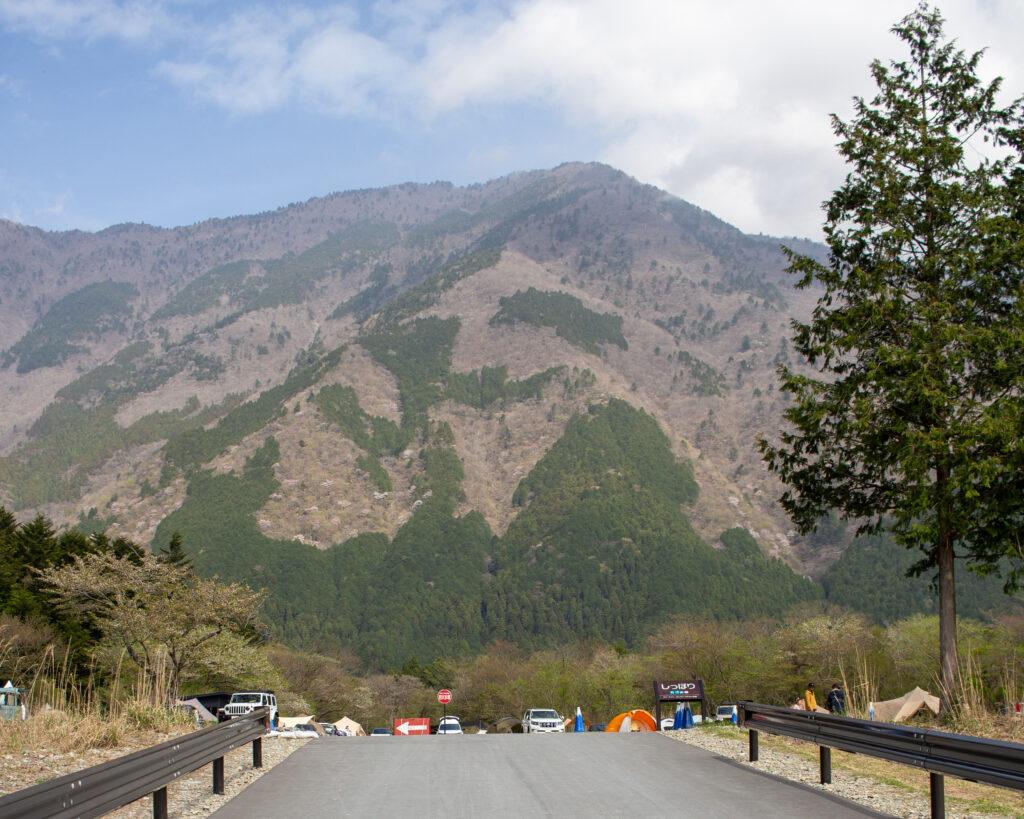
This is one of the bigger campsites I’ve been to in the area, and that size cuts both ways. On one hand there’s a real sense of space and privacy between groups. On the other, it’s so spread out that at times it almost felt like there wasn’t much to actually do beyond the campsite basics, no on-site activities pulling my son’s attention beyond the field itself.
The Mt. Fuji view is a big draw for many people who choose this campsite, but it’s not guaranteed everywhere. We weren’t able to snag one of the better-positioned areas since we booked later than we should have, and the areas with the strongest views fill up fast. Even from where we landed, we still caught the snow-capped tip of Mount Fuji peeking over the treeline, which was still a lovely moment with my kid pointing at it over breakfast.
Asagiri Camp Base Sorairo is popular enough that it can feel crowded on weekends, and the kitchen and shower lines back up during peak hours, so if you’re camping with a kid and need efficiency around meal times, aim for an early or midweek stay if your schedule allows it.
Should You Go With Kids to Asagiri Camp Base Sorairo?
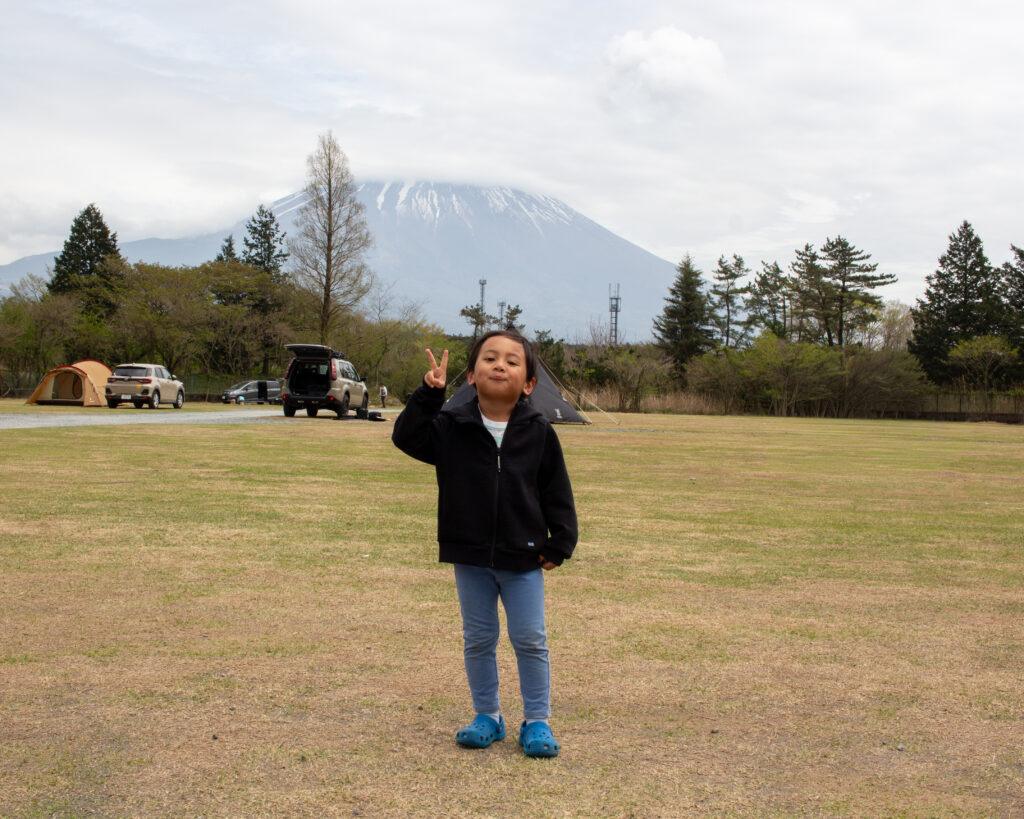
If you want car camping without the intimidation factor, this is a strong pick. The bathrooms alone make it worth it if you’ve ever had a toddler refuse to use a grubby campsite toilet. It’s clean, it’s well run, and the staff are clearly used to families.
If you’re chasing that classic wide-open, you honestly might get more of that at Fumotoppara right next door, and Sorairo’s more developed corners, like the terraced Shippori sites, can feel a little less rugged by comparison.
Either way, book early if a specific Mt. Fuji-view area matters to you, because those spots go first, and know exactly which zone you’re landing in before you commit.