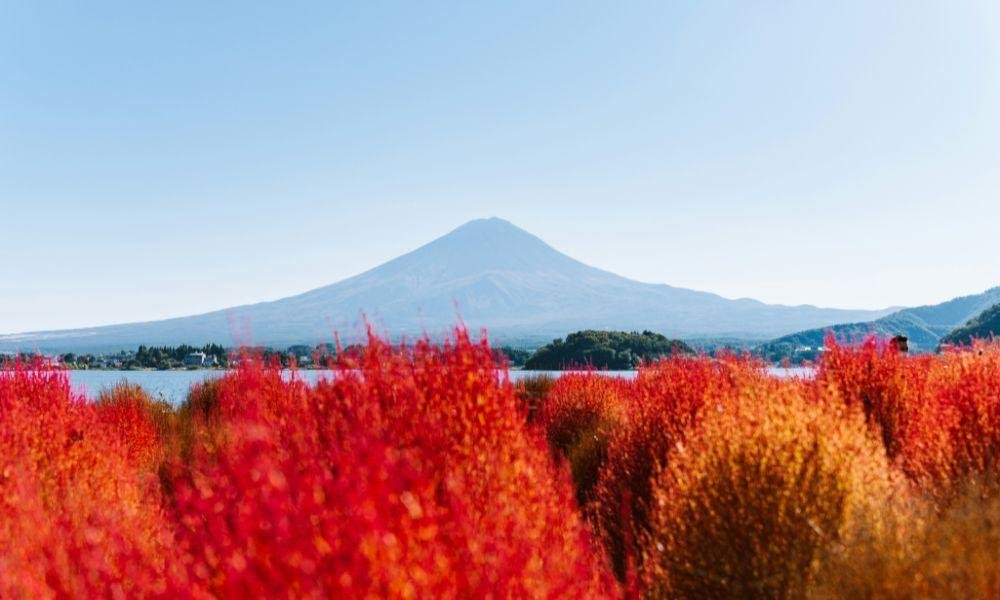
Searching for what to see in Japan in autumn usually gets you one image: a temple roof buried under red maple leaves. And yes, those are pretty and real, but those are also just part of the last chapter. Build your whole trip around momiji and you’ll miss six weeks of scenery most visitors never even know exists.
There’s actually an old concept called Aki no Nanakusa, the seven plants of autumn. You need to understand one thing. Autumn here was never built around a single tree turning red. It’s a season with acts. Each one arrives, has its moment, and clears out before the next takes over.
Red spider lilies open first, right around the autumn equinox in late September. Cosmos and pampas grass overlap that window and run into October. A red shrub called kochia peaks mid-October. Then, ginkgo and maple don’t get going until mid to late November around Tokyo and Yokohama, sometimes hanging on into early December if the weather cooperates.
Of course, none of these dates are fixed. A warm September pushes everything back, and a cold snap in October speeds it all up. Japan’s meteorological services release forecasts a few times a season, so be sure to check before your trip. Don’t build your whole itinerary on a date from a blog post, mine included.
Higanbana
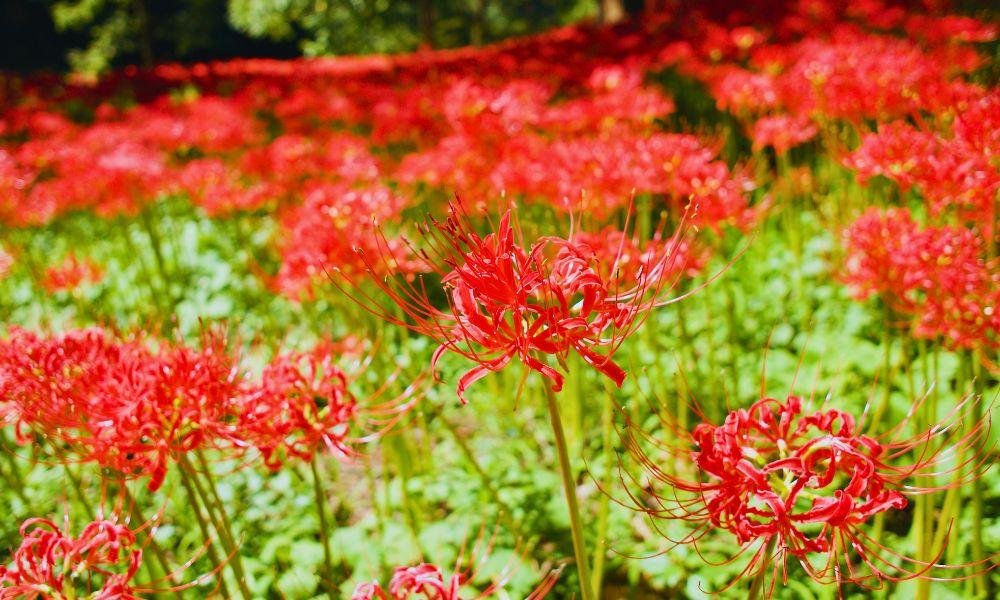
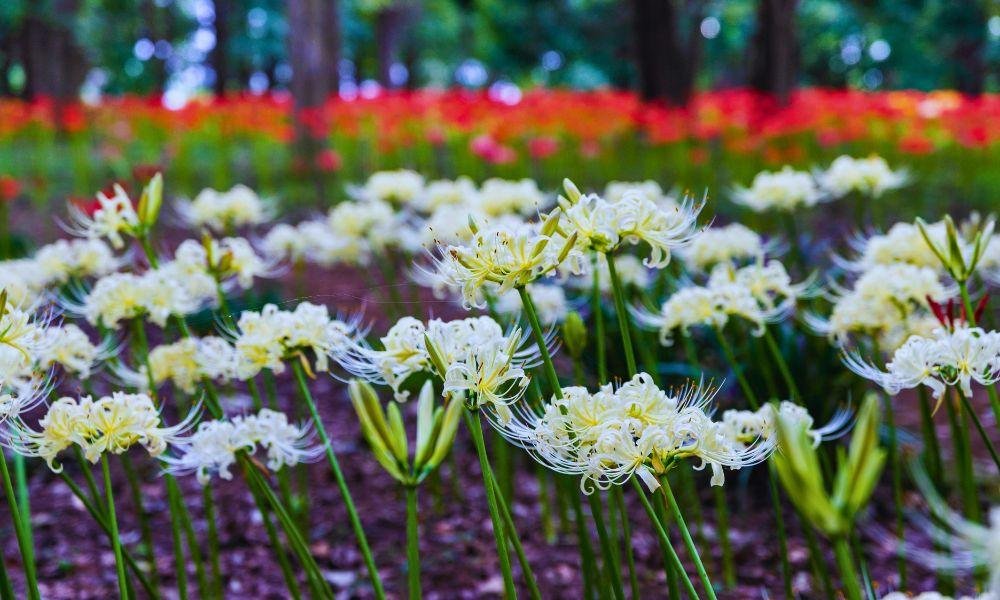
Higanbana, also called manjushage, shoot straight up out of bare ground. No leaves anywhere near them. One week there’s nothing there. The next week you’re looking at a solid sheet of scarlet, stems and flowers with zero green mixed in. That’s exactly why a full field of them looks a little unsettling the first time you see one. Sometimes a bunch of them will just sprout out of a random patch in a normal neighborhood.
The reason they look that way comes down to how they grow. The flower stalks push up from underground bulbs around September and produce those red blooms with no visible leaves at all. The leaves only come later, after the flowers are done. So the whole plant runs backwards compared to everything else you’re looking at that month.
They also carry real cultural weight and have long been tied to graveyards, so much so that some older residents still won’t bring them indoors. Meanwhile, an entire generation of younger visitors treats them as one of the best photo ops of the year.
Now, if you’ve got a kid, it is very important to know that higanbana bulbs are toxic. Your kid probably isn’t eating a flower. But bulbs get dug up, poked, sometimes sampled, by small children who treat any patch of dirt as an open buffet. So, watch little hands near the base of the plants.
The bloom at a given spot lasts barely ten days, so try to visit as soon as you hear that you’ve started blooming. See my recommended spots for higanbana near Tokyo and Yokohama:
Kinmokusei
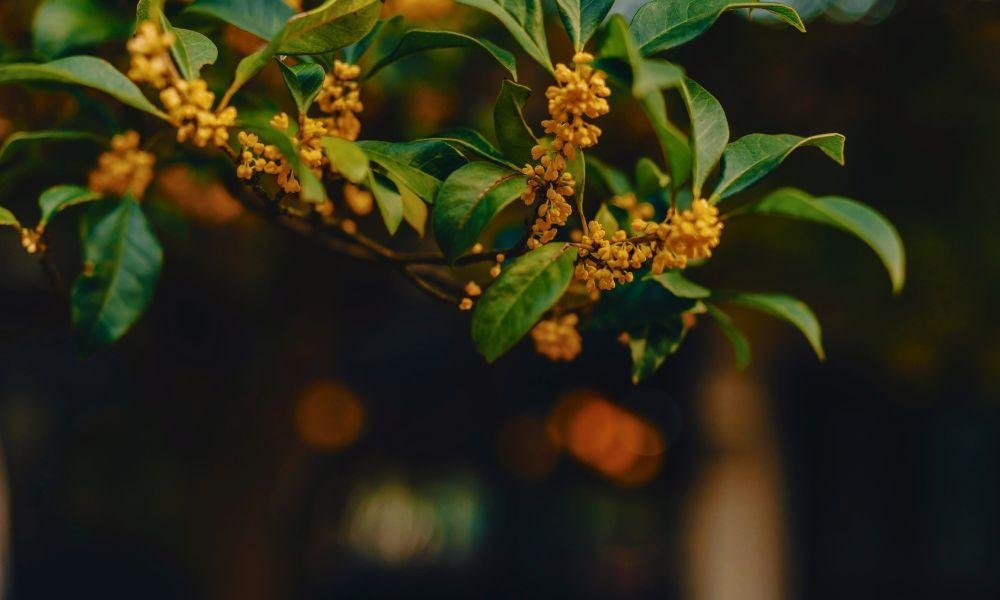
You’ll smell this one first before you see it. Kinmokusei blooms in small orange clusters easy enough to walk straight past. The scent, though, travels far more than the flower size suggests. Walking any neighborhood around Tokyo or Yokohama in late September, and catching a sweet, faintly apricot smell coming from what looks like an ordinary hedge? That’s kinmokusei.
It grows in ordinary gardens and along sidewalks everywhere, not in one famous field with a festival built around it. Think of it as a seasonal alarm bell instead, one of those sensory cues that tells you autumn has actually started.
The bloom is short, usually a week or two, and a heavy rain will knock the flowers off the branches overnight. You’ll go out one morning and the smell that’s been following you around for days is just gone, with a scatter of tiny orange bits on the pavement where it used to be.
Susuki
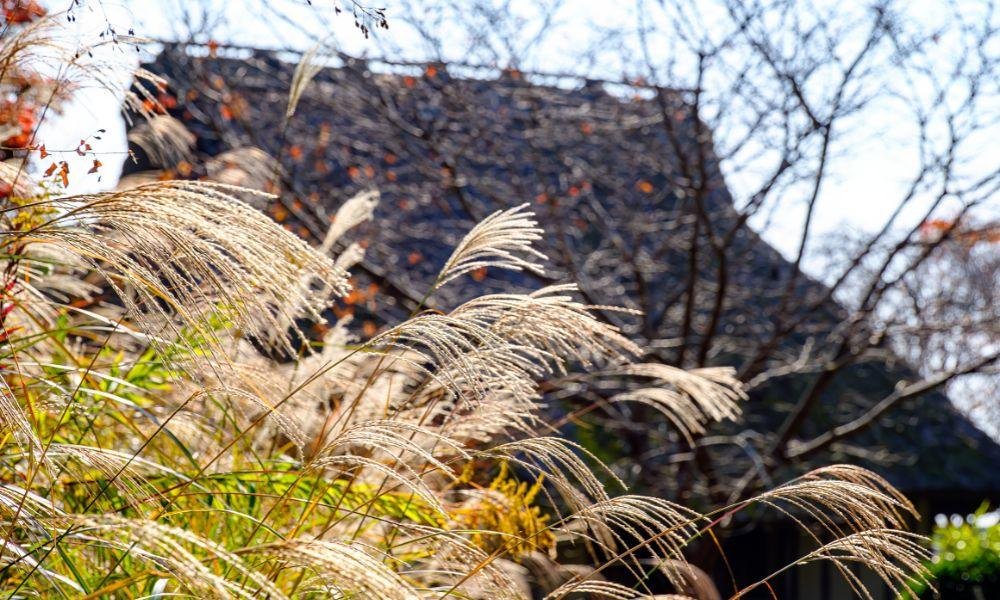
Susuki doesn’t punch you in the face with color the way a red or pink field does. That’s exactly why most first-timers walk right past it. But a field of tall pampas grass, catching the light, rolling in waves when wind picks up, and shifting from green to a shimmering silver-gold? Now, that’s stunning, very much so that pampas fields have become their own destination through October into early November.
The color shift is gradual. The grass sends up mauve-tinted seed heads starting in September, and those turn into the silvery tufts everyone photographs by mid-autumn. By early November, it goes gold. Susuki is also tied to tsukimi, the moon-viewing tradition, which is why you’ll occasionally see a few stalks arranged indoors next to dango this time of year.
If you go, wear proper shoes. The famous fields are on hillsides with a single narrow path running up through them, and there’s usually no shade, no benches, and a steady stream of people going both directions on a path built for about half that traffic.
Cosmos
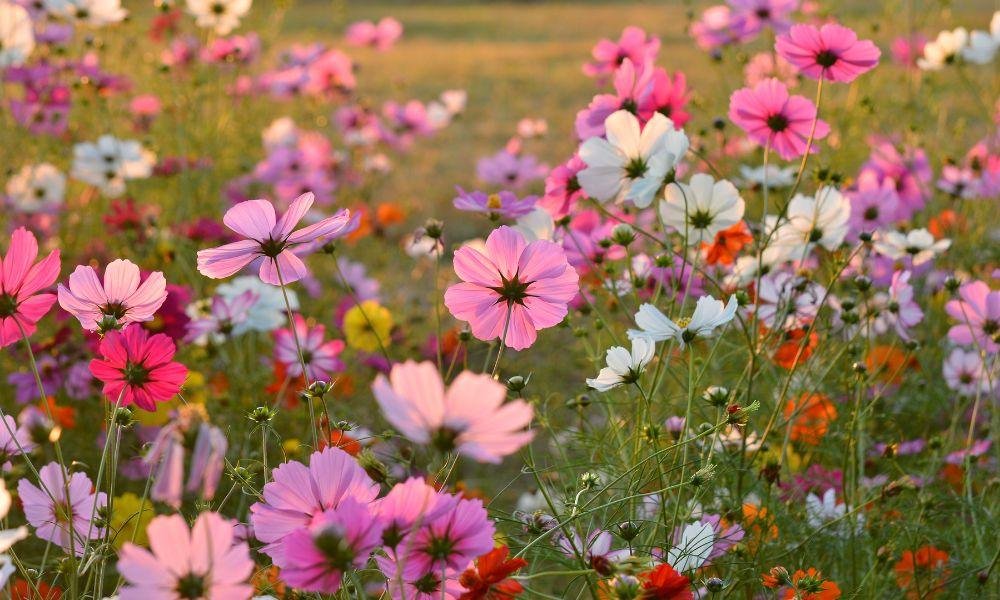
Cosmos fields are what most people picture when they hear autumn flowers in Japan. Pink, white, and orange blooms swaying across an open field. They run from mid-September through late October depending on location, and the bigger displays stagger multiple fields on different schedules.
The big parks plant several separate fields that peak weeks apart, which means the same park in mid-September and mid-October gives you two completely different color palettes. Early-season fields tend toward the pink and white varieties. The orange and yellow ones usually come later.
Cosmos sometimes get called Akizakura, the cherry blossom of autumn. Nobody flies across the world for them the way they do for sakura, but the fields are just as photogenic, and about a hundred times less crowded, too. The catch is wind and rain. Cosmos stems are thin and top-heavy, and a typhoon passing through in late September or early October can flatten an entire field in a few hours.
Kochia
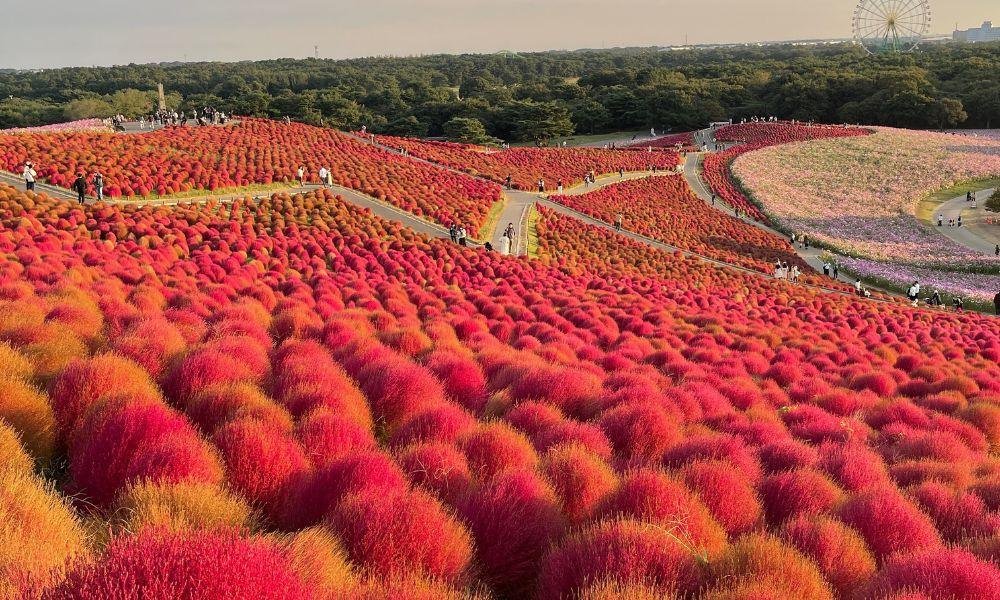
Kochia isn’t a flower. It’s a rounded shrub, and it’s become one of the most photographed things in the country purely because of what happens to its color. It’s green at the start of the season, then a deep red by mid-October. The shift happens gradually, so the exact week you show up matters a lot. Fortunately, popular locations, like Hitachi Seaside Park, post updates of how the colors are changing. Be sure to check those before your trip, because if you show up even a week early, you get a green hill with a bit of pink creeping in, not the viral shot you saw online.
The red phase also doesn’t hold. After peak, the bushes fade to a dull brown and stay that way so, in my opinion at least, arriving late is worse than arriving early. At least green looks intentional. And since everyone has seen the same photo, expect the crowds that come with it. Weekends during peak week at the famous spots mean queuing to walk up the hill.
Kiku
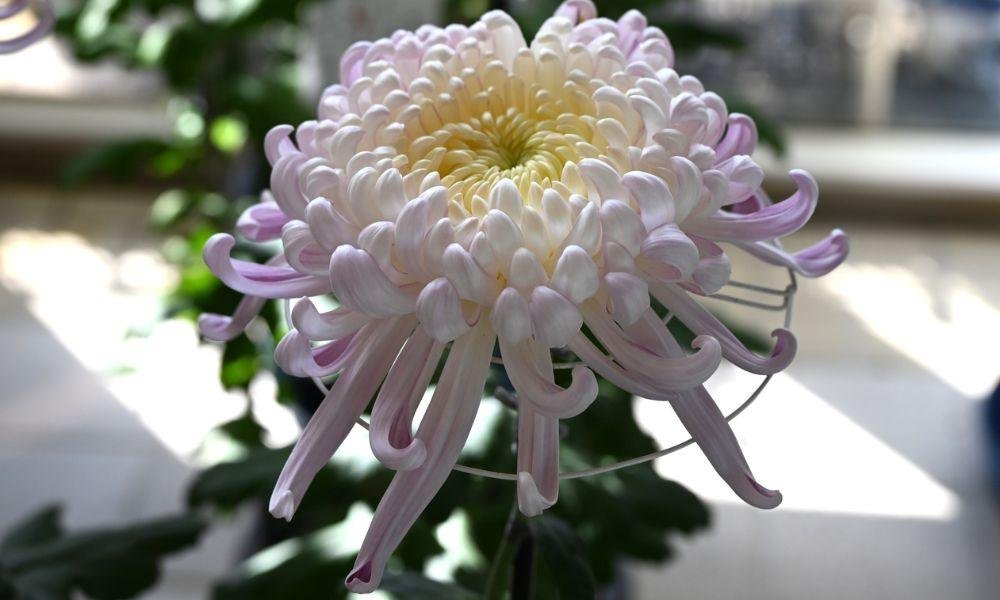
Kiku are chrysanthemums, and they show up from mid-October through late November, peaking around early to mid-November in the Tokyo and Yokohama area. That puts them right in the same window as early koyo, which means you can often catch both on the same day out.
In Japan, they’re not usually grown in fields for large displays. They are potted and staged at arranged exhibits . A single bloom can be the size of your face, and the plants are trained into specific shapes over months.
Where they turn up splits into two tiers. The low-effort version is everywhere: temple and shrine grounds, local park entrances, city hall lobbies, even shotengai arcades will line up a row of potted kiku on the pavement.
The bigger version is a proper kiku matsuri or exhibition. These run at castles, larger temples, and botanical gardens, typically from late October through mid-November, and they’re often judged competitions. Entry to these exhibits is either free or a few hundred yen.
Practically speaking, kiku displays are almost always under tents or awnings, which makes them one of the few autumn things on this list that still works on a rainy day. To be clear, these exhibits are a fifteen-minute stop, not a day trip, unless you’re specifically into horticulture. Pair it with something else in the same area.
Icho
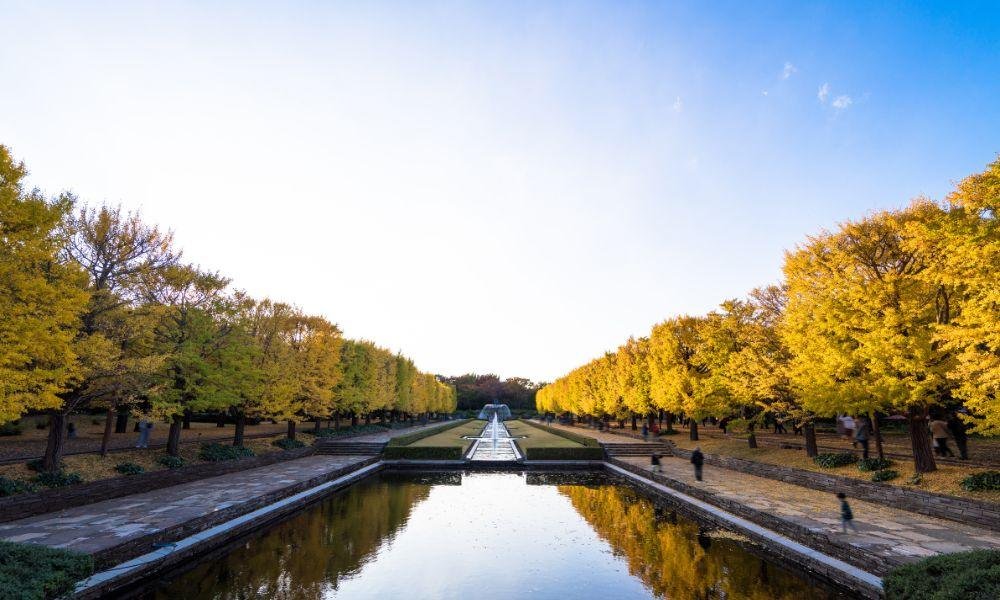
Icho or ginkgo is the image everyone has in their head when picturing Japanese autumn. They turn a deep, almost fluorescent yellow, and once they start dropping, the ground underneath gets buried in gold thick enough to hear it crunch under your shoes. Because ginkgo are planted as street trees in rows, you get long uninterrupted avenues of them rather than scattered individual trees.
Compared to momiji (maple leaves), icho turn later and hold longer. In the Tokyo and Yokohama area, expect them around late November. They also stay yellow for a good two to three weeks, which makes them far more forgiving than most things on this list if your dates are locked in already.
There are actually two separate looks worth timing for. Early on, the leaves are still on the branches and you’re walking through a yellow tunnel. Later, after some of the leaves have dropped, you get not only a golden tunnel but also a golden carpet.
You usually find ginkgo-lined avenues in major parks and along wide city streets, university campuses, and the approach roads to larger shrines. They’re genuinely urban trees, so unlike momiji, you do not need to leave the city or take a mountain bus to see a good one. Many of the best stretches are free public streets.
Now, I just have to say, female ginkgo trees drop fruit, and it smells appalling. The fruit gets crushed underfoot on busy avenues, so peak season on a popular street means walking through that smell for the entire stretch. Watch where your kid steps, because the pulp sticks to shoe treads and comes home with you.
Momiji
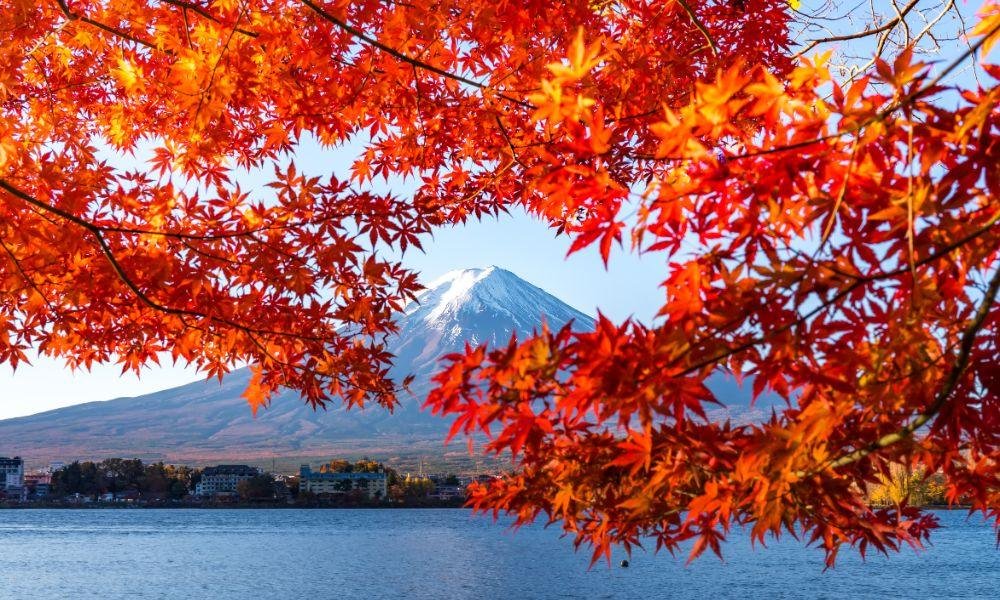
Momiji is the one you already came for. Japanese maple leaves turning from green through orange to a deep red, usually all at once on the same tree, which is why a single maple can look like it’s on fire from a distance.
Momiji moves from north to south and from high elevation to low. So, mountain areas at altitude start in mid-October. The Tokyo and Yokohama lowlands don’t peak until around late November, with the 2026 forecast putting Tokyo’s red maple near the very end of the month. If you’re in Japan in October, you don’t have to wait, you just have to go up.
That “momiji season” is about six weeks long nationally, but only about ten days long in any one specific place. Full red, then browning and dropping. It is very easy to find momijis in temple and shrine gardens, since maples were deliberately planted there for centuries, plus mountain valleys, gorges, riversides, and formal Japanese gardens. Traditional gardens are usually the better call with kids, because they’re contained, have paved paths, have toilets on site, and have somewhere to buy a drink. While hiking a mountain trail sounds exciting, it doesn’t have any of those comforts.
Lots of gardens and temples also run evening light-ups during peak, with extended hours and separate or re-entry tickets. Book or check in advance, since the popular ones sell timed slots and sell out. Evening also means genuinely cold by late November, especially anywhere with elevation or water nearby.
FAQs: What to See in Japan in Autumn
When does autumn actually start in Japan?
Depends what you mean by “start.” Higanbana kick things off around the September equinox, but if you mean koyo specifically, that’s late October at the earliest up in the mountains and late November down in Tokyo and Yokohama.
What’s the single best month to visit for autumn colors?
November, if momiji and icho are what you’re after. If you want the fuller picture, cosmos, kochia, and susuki too, mid-October is the better all-rounder since several things overlap that month.
Is Tokyo or the mountains better for koyo?
Mountains peak first, roughly mid-October, because of the elevation. Tokyo and Yokohama peak later, usually the last week of November. If your trip lands in October, go up. If it lands in November, stay in the city.

One thought on “What to See in Japan in Autumn: A Month-by-Month Bloom Guide”
Comments are closed.