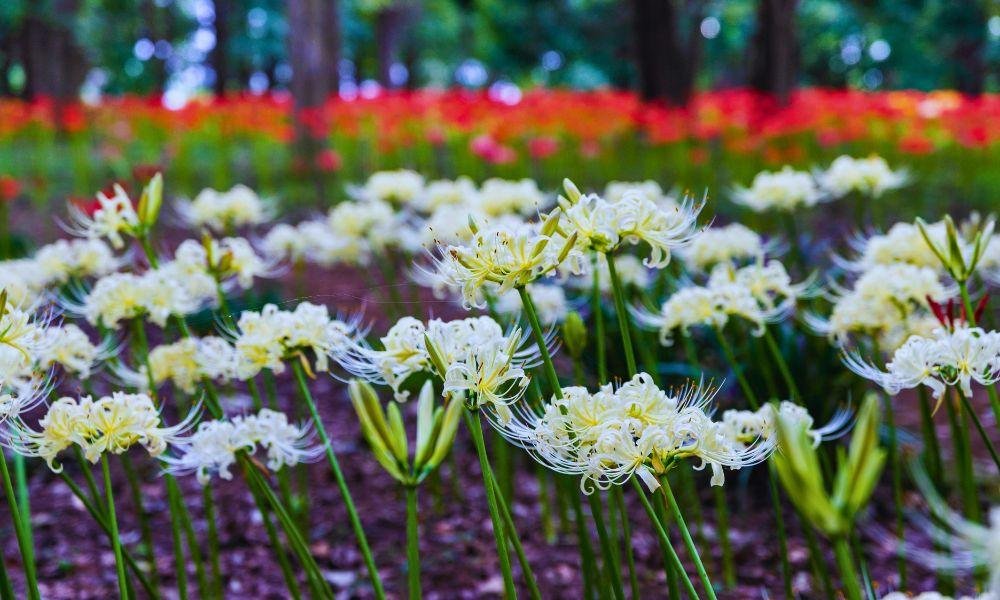
My Instagram feed turns into a wall of red every September. I scroll through it from my couch in Yokohama and, without fail, decide to also go to the spots (mostly out of FOMO, if I’m being honest). If you’re searching for higanbana spots near Tokyo and Yokohama, the good news is that you don’t need a car for any of places I’m recommending in this list. Some of the locations are also free!
A Quick Introduction to Higanbana
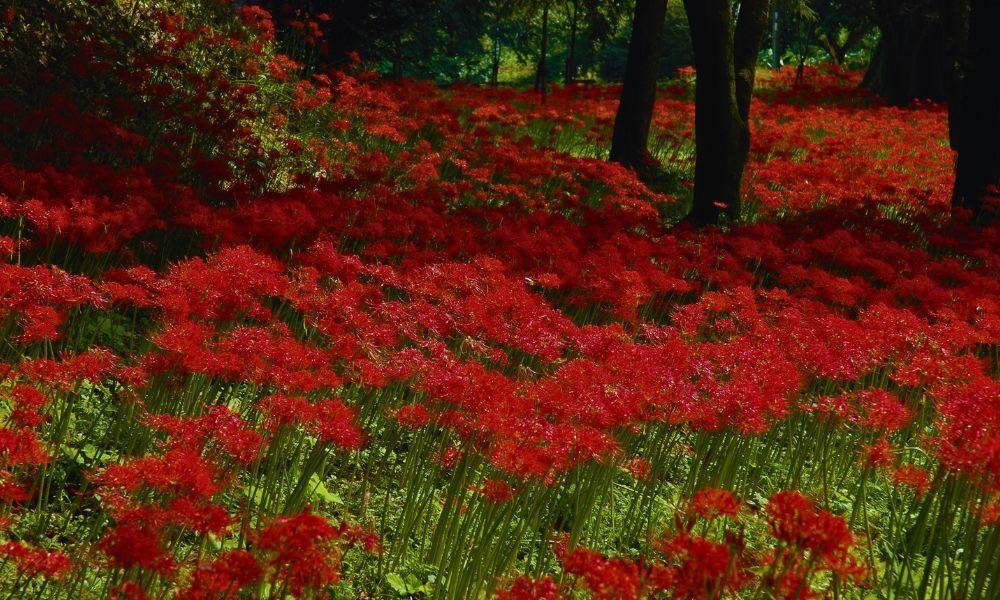
Higanbana means “flower of the other shore.” In Buddhist tradition, these flowers are tied to the equinox and supposedly grow along the river separating the living from the dead. In Japan, you’ll notice that temples and graveyards are full of them, but that’s actually for a much less poetic reason. The bulbs are poisonous, so farmers and monks planted them on purpose to keep rats and moles away from graves and rice paddies.
Once someone explained that to me, I stopped side-eyeing these flowers as creepy horror-movie bait but as one of the best things to look forward to seeing in Japan in autumn. The window for seeing them is short though, and a stretch of late summer heat can push blooming across the Kanto region back into late September. Fortunately, most of the popular locations release forecasts and updates of their bloom, so be sure to constantly check official websites for the week of your trip.
Kinchakuda Manjushage Park (Saitama)
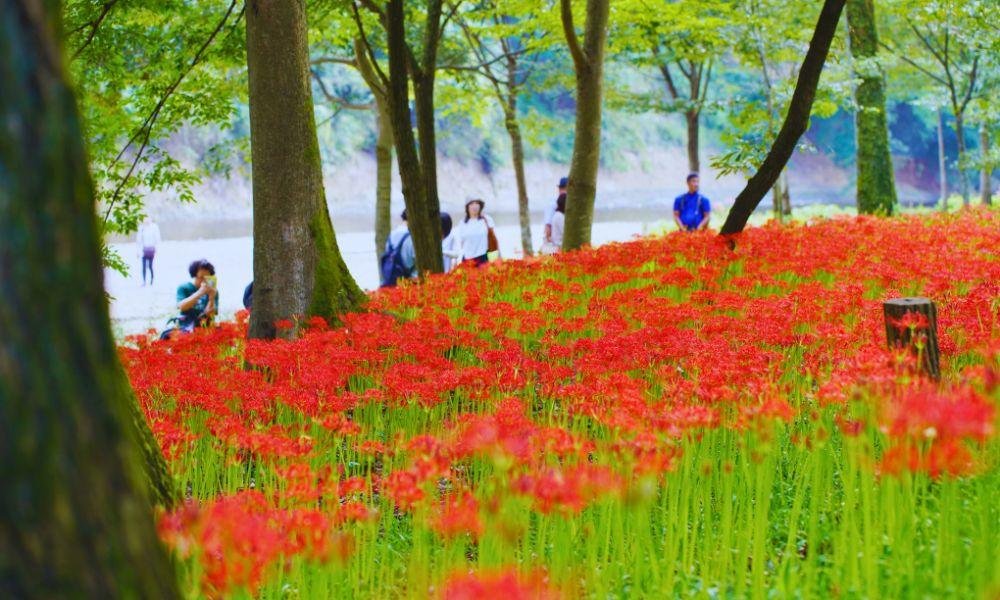
If you’ve ever seen one of those viral ‘higanbana spot near Tokyo’ TikToks, there is a very high chance that it is of this location. The park sits inside a bend of the Koma River, on land shaped almost exactly like a drawstring purse, which is where the name Kinchakuda actually comes from. Walking trails wind between the trunks so you’re not trampling anything, and the shade from the trees keeps the whole place bearable even when the humidity hasn’t fully broken yet.
During the festival, Seibu Railway usually runs extra trains between Hanno and Koma stations, and on weekends they even make limited express trains stop at Koma, which normally skip right past it. While that sounds like good news (and it definitely is), it also tells you something about how packed this event gets.
- Price: 500 yen entry during the flowering period (free for junior high age and under)
- Getting there: Seibu Ikebukuro Line to Koma Station, then about a 15 minute walk. Direct trains from Ikebukuro run close to an hour.
- Official info: Hidaka City Kinchakuda Manjushage
Saihoji Temple (Yokohama)
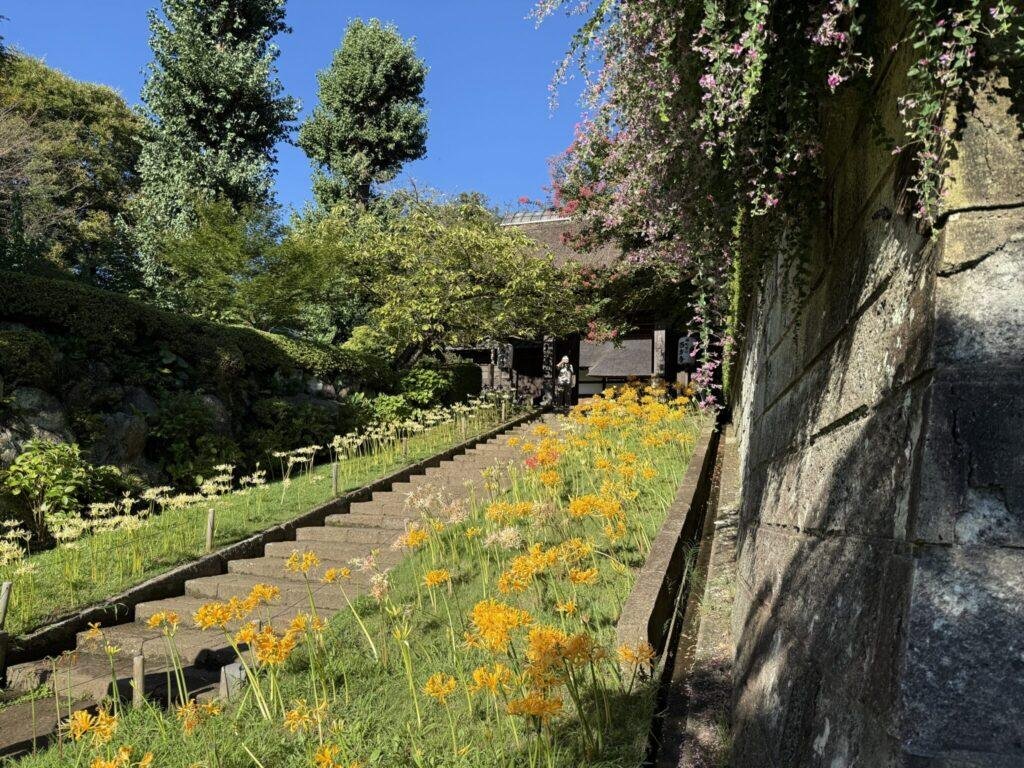
This is my actual go-to, mostly because I can get there without committing an entire day to it. The temple traces back to the Kamakura period. Standing under that gate roof here with spider lilies planted in color blocks on either side is a different experience from a flat open field.
What sets this place apart from almost everywhere else on this list is the color range. Most higanbana spots are a sea of red. Here you get red, yellow, and white lining the stone steps up to the gate, with soft pink mixed in near the bell tower. Locals post updates through blooming season showing the yellow and white varieties opening first, with the reds catching up closer to peak.
Another reason I prefer coming here for higanbana is that the grounds is still relatively lesser known compared to other spots that you can actually stand still and look at the flowers or even take photos without someone’s elbow in your shot.
- Price: Free
- Getting there: About 5 minutes on foot from Shin-Yokohama or Nippa Station on the Yokohama Municipal Subway Blue Line
- Official info: Saihoji Temple
Mizumoto Park (Tokyo)
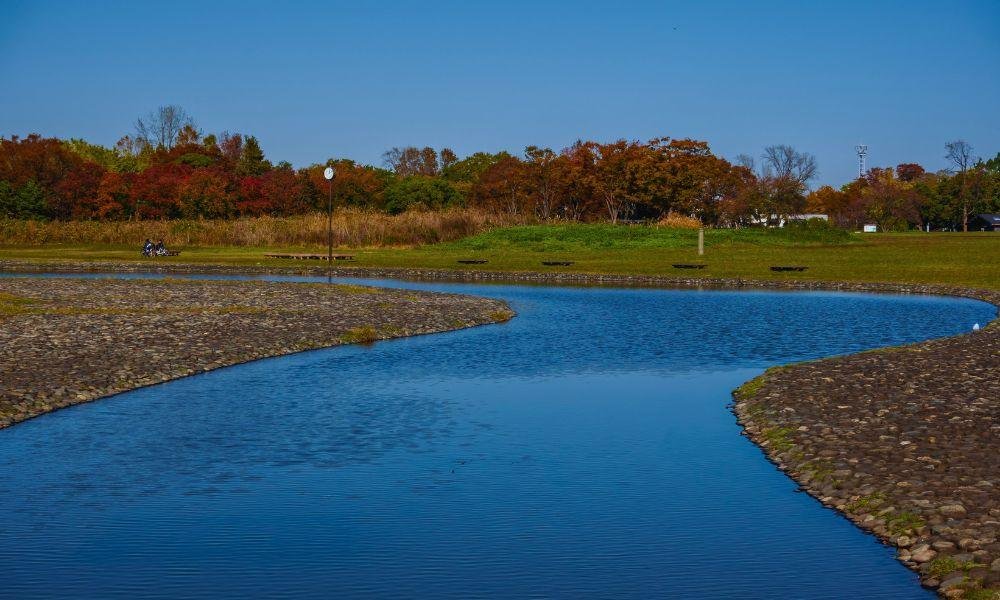
This is the one to pick if you want higanbana without leaving Tokyo proper. The whole park is built around Koai-dame, a reservoir dug under the shogunate to protect Edo from flooding. There’s a metasequoia grove, a marsh garden, and if you’re lucky, kingfishers along the water’s edge. The entire park is huge (like almost a hundred hectares huge), but the section locals call Higanbana Hill sits along one of the channels, with flowers reflecting off the water.
- Price: Free, open 24 hours
- Getting there: From JR Kanamachi Station south exit, take the Keisei bus toward Togasaki and get off at Mizumoto Koen, about a 7 minute ride
- Official info: Tokyo Metropolitan Park Association, Mizumoto Park
Yachiyo (Chiba)
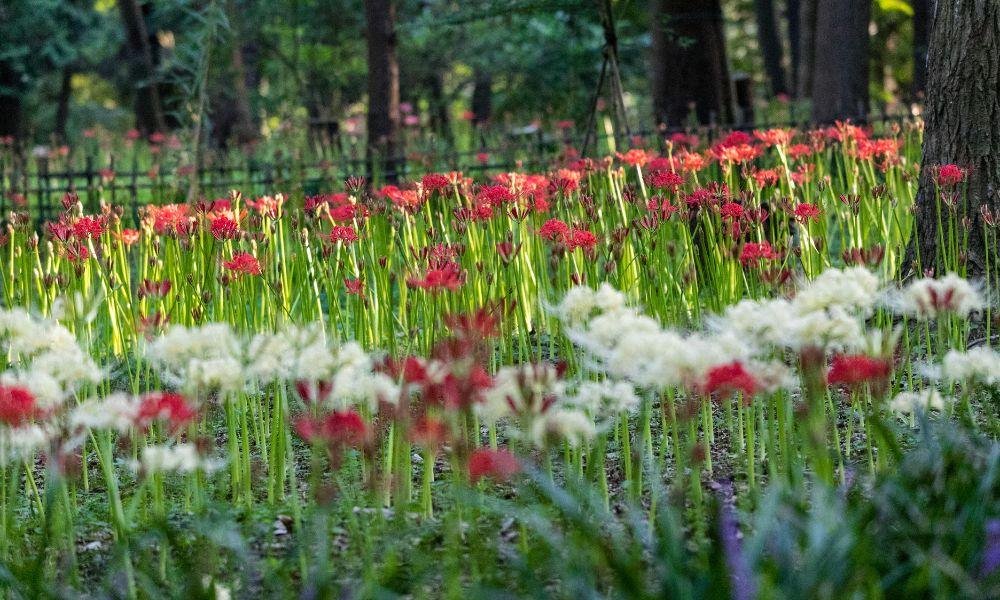
This one trades quiet nature walks for an actual community event, which makes it the better call if your kid needs more than flowers to stay interested. The festival runs at Murakami Ryokuchi Park and is organized by a local committee with backing from the city and the Toyo Rapid Railway, not a private park operator, so it has that unmistakable small town festival feel. Recent years have kept it low key, with kitchen car food stalls and a flower viewing area rather than stage performances, so don’t go expecting a big production. Go expecting a relaxed afternoon where nobody’s rushing you past the flowers.
- Price: Free
- Getting there: Keisei Main Line or Toyo Rapid Railway to Katsutadai Station, north exit, then Toyo Bus toward Murakami Danchi and get off at Murakami Danchi Dai-ichi
- Official info: Yachiyo City
Koishikawa Korakuen (Central Tokyo)
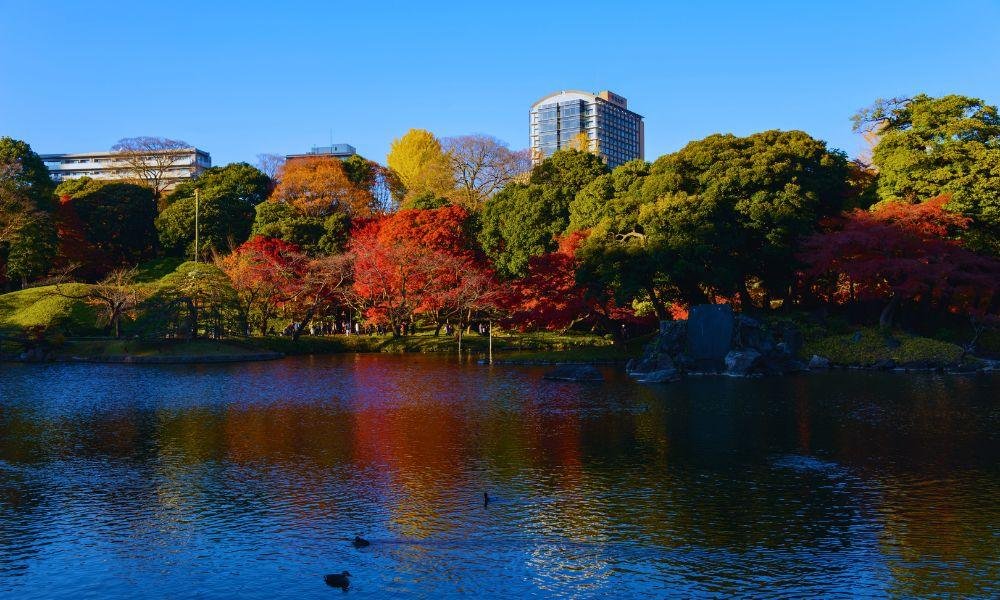
Some days you don’t have it in you to deal with transfers, and that’s a completely valid reason to pick this one. It’s one of Tokyo’s oldest surviving Edo period gardens, with design influence from a Chinese Confucian scholar who worked as an advisor to the clan. Here, Higanbana show up scattered along the streams rather than in one dense field, which makes it work best as an addition to your itinerary if you are in the area, rather than a dedicated flower spot.
- Price: Small garden entry fee, check current rate on site
- Getting there: Walk from Iidabashi Station
- Official info: Search “Koishikawa Korakuen” official Tokyo parks page for hours and entry fee
FAQs: Higanbana Spots Near Tokyo and Yokohama
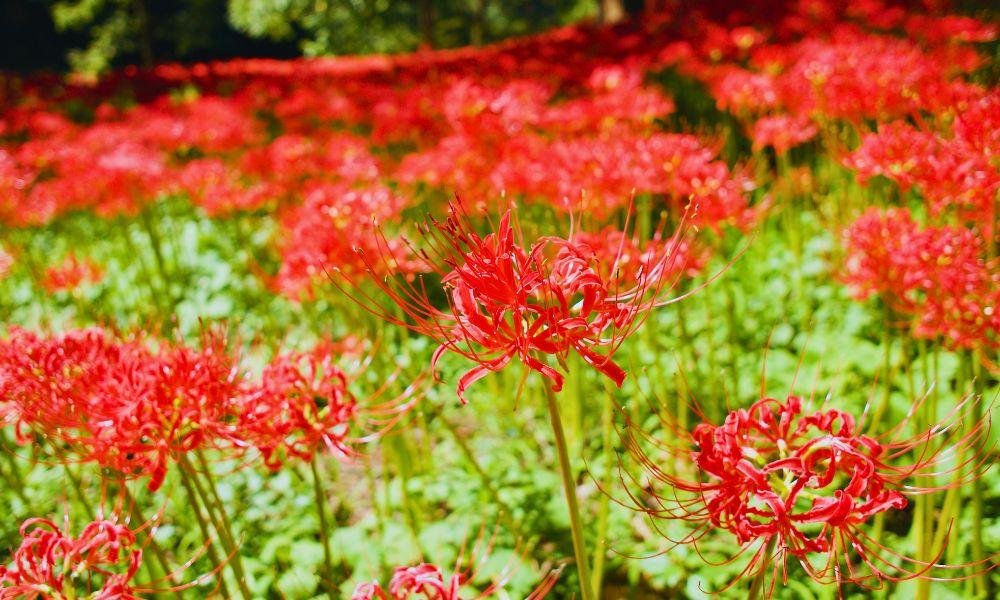
When exactly should I go this year for higanbana blooms?
Peak bloom usually falls somewhere between mid-September and early October, but the exact timing shifts based on how stubborn the summer heat is. Check the official pages I linked above the week before your trip for the latest and most updated info.
Are higanbana spots near Tokyo and Yokohama free?
Mostly. Mizumoto Park, Saihoji Temple, and Yachiyo cost nothing. Kinchakuda charges a small fee during festival season, while Koishikawa Korakuen has standard garden admission, since it runs as a maintained historical site year round rather than a wild field.

One thought on “The Best Higanbana Spots Near Tokyo and Yokohama”